What Is www.onthisveryspot.com? The History-Spot Site, Then and Now
If you searched www.onthisveryspot.com expecting the website that told you exactly where history happened, here is the honest short answer: that site is real and it ran for well over a decade — but it no longer lives at this address. The original On This Very Spot was a travel guide to the exact locations of historic and pop-culture events; today the same domain hosts an unrelated technology and gaming blog, and the history database survives only in web archives.
The original was a simple, appealing idea done early. Under the name On This Very Spot, and a footer credit to OTVS, LLC, it let visitors browse “spots” — the precise places where famous people stood, events unfolded and scenes were filmed — by name, by destination and by topic, and it invited readers to add spots of their own as “Spotters”. The domain was registered in November 2004, the site dated its own copyright from 2002, and archived copies run from 2007 through at least 2019.
This article separates the two records. Below is what the original site verifiably was, what happened to the domain, which claims circulating about it check out and which do not, how you can still browse the original in the Wayback Machine, and where the exact-spot history idea genuinely lives today.
Profile Biography Table: www onthisveryspot .com
| Feature | Description |
|---|---|
| Website Name | On This Very Spot (onthisveryspot.com) |
| Purpose | To identify and share the exact locations where historical and pop-culture events took place (the original site) |
| Founded | Not precisely verifiable — the original site’s footer claimed “©2002–2015 OTVS, LLC”; the domain registration dates to 15 November 2004 and the earliest Wayback Machine capture is from January 2007 |
| Operator | OTVS, LLC, named in the original site’s own footer; no operator is publicly confirmed for the site at this address today |
| Content Focus | Historical and pop-culture event locations, browsable by name, destination and topic |
| Community | “Be a Spotter!” — the original site invited visitors to add their own spots |
| Accessibility | Free to browse, no account needed; the original database is now preserved in the Wayback Machine |
| Status Today | The history site is gone from this address — the domain now hosts an unrelated technology, gaming and general blog (checked November 2026) |
What Happened to On This Very Spot? The Domain Today
We checked this name the way this series checks every site profile: by visiting the address itself, and then by comparing what is there now with what the archives show used to be there. The two could hardly be more different.
What the archives show: a purpose-built history guide. Archived copies of the original site — captured by the Wayback Machine from January 2007 onwards, and still intact in a February 2019 capture — carry the tagline “Your Travel Guide to History & Pop Culture”. Its browse structure was the whole point: an A–Z index of names, destinations from the United Kingdom and United States to Australia, Africa, Asia and Europe, and topics running from Wars & the Military and Government & Politics to Arts & Entertainment, Crime & Punishment, Museums and Mysteries, Oddities & Tragedies. A “Be a Spotter!” page invited users to add content, and the footer credited OTVS, LLC with a copyright line beginning in 2002.
What is there now: a generic WordPress blog. The current site at onthisveryspot.com covers technology and computing, video gaming, Minecraft, betting and “codes”, under categories and author names that have nothing to do with history — and its homepage carries long strings of keyword-stuffed gibberish (“otvptech technology news by onthisveryspot”, “onthissveryspotnett explore bygone eras with zestyzircon”). Its own About page describes “a bunch of tech enthusiasts who love exploring the latest gadgets, games, and digital trends”. Archived copies show the change was already complete by the end of 2022: a January 2023 capture is the tech blog, not the history guide. Whether the domain was sold, expired and re-registered, or repurposed by its owner cannot be determined from public records — what is certain is that none of the original spot database is reachable at this address today.
It is the same pattern readers met in the blog mobilecreativeorg profile: a real name with a real past, profile pages still describing the old thing in the present tense, and something quite different actually sitting behind the address. The profiles are describing a site that used to exist.

How www onthisveryspot .com Works
In its original form, the working method was browse-first rather than map-first. You started from one of three indexes: a name (the A–Z list of famous people), a destination (country and region pages covering the United States, the United Kingdom, Europe, Asia, Africa, Australia and the Americas), or a topic (sixteen of them, from Action & Adventure and Buildings & Structures to Social Sciences and Sports & Recreation). Each index led to spot pages: a named place, the event or person attached to it, and the story of what happened there.
The archived homepage also carried a search box and a “Book Travel” route, positioning the guide as a trip-planning companion as much as a reference: find the spots first, then go and stand in them. That archived structure is still how the site can be explored today, through the Wayback Machine — the live address no longer offers any of it.
A Gateway to Forgotten History
The enduring strength of the idea was never the famous end of the catalogue. Presidents’ speech sites and battlefields are documented everywhere. It was the long tail: the ordinary street corner where a protest turned, the building where a band first played, the bench and sidewalk spots that no plaque marks. By attaching a story to a precise, visitable place, the original site made local and minor history feel recoverable rather than lost.
That layer is exactly what has been lost with the domain’s change of use. The archived copies preserve the indexes and a portion of the spot pages, but a browsable hobbyist database of that era does not survive repurposing intact — which is why the verification steps later in this article matter for any “whatever happened to that site?” search, not just this one.
Travel and Education Come Together
The original pitched itself squarely at trip planning and learning: “Visit Travel Spots Related To Famous People, Things & Events!” was its homepage invitation. For a teacher or a travelling family, the value was context at street level — an event stops being a paragraph in a book when you can stand where it happened, and the browse-by-destination structure was built for planning a route around spots in one city or region.
That use still works, with one adjustment: plan from the archived copy, not the live domain. The Wayback captures of the destination and topic indexes (the February 2019 capture is a good, complete one) give you the original lists; modern mapping apps then do the navigating the old site never could.
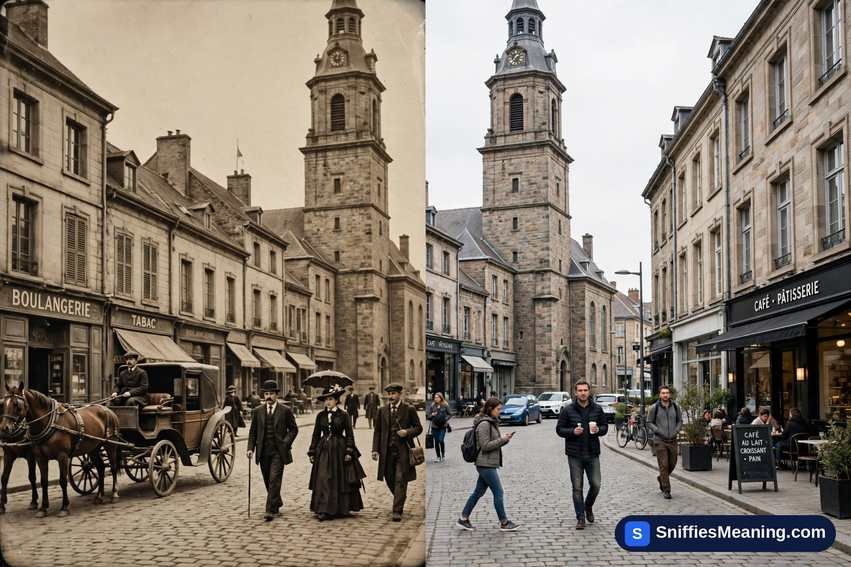
Explore Cities Like Never Before
City exploring was the natural habitat of the concept. The destination index broke coverage down by country and region, and the topic index let the same city be read several ways — its wars, its crimes, its music, its museums. A single trip could be threaded through a dozen unrelated centuries without leaving a few neighbourhoods.
Nothing about the live domain supports that use today: its city content is the generic travel-and-tech fare of a general blog. Readers who arrived at this address mid-trip-planning should treat any “spot” style claim on the current site as unconnected to the original database — the two share a name and nothing else.
A Treasure Trove for Pop Culture Lovers
Pop culture was half the brand from the start — the tagline gave it equal billing with history. The topic structure reflected that: Arts & Entertainment and Sports & Recreation sat alongside Wars & the Military, and the name index treated entertainers and athletes as first-class entries next to politicians and generals. Film locations, concert sites and sporting moments were the gateway spots that pulled casual readers into the heavier history around them.
That mix was ahead of its time — location-based pop-culture tourism is now an industry — but the credit belongs to the archived original, not to anything at the address now. The current blog’s entertainment coverage is standard gaming and tech content with no connection to the spot database.
Why www onthisveryspot .com Stands Out
Judged on what it verifiably was, the original stood out for three reasons. It was early: a location-first history guide running by the mid-2000s, before smartphones made “what happened here?” an app category. It was structured: name, destination and topic indexes made a hobbyist database genuinely browsable without a map interface. And it was participatory: the “Be a Spotter!” invitation made readers contributors years before crowdsourced history platforms became common.
Those are claims about the archived site, and they can be checked in the archive. What cannot be claimed is continuity: a profile that describes the spot database in the present tense, in 2026, is describing a site that has not answered at this address since at least the end of 2022.
Easy Interface and Search Features
The original’s interface, as preserved in the archives, was a directory rather than an app:
- Browse by name, A–Z
- Browse by destination — country and region pages
- Browse by topic — sixteen categories, from Action & Adventure to Wars & the Military
- Search the spot database from the homepage
- Add your own spot through the “Be a Spotter!” page
There were no accounts to create and no app to install; the whole database was reached through those indexes. Any description of the site offering more than this — interactive maps, apps, personalised anything — goes beyond what the archived record shows.
Community Contributions Welcome
This claim, unusually, verifies exactly. The archived homepage carries the invitation in so many words: “Be a Spotter! YOU can add content to this website.” Community submission was a designed feature of the original, with the spot format — a place, an event, a story — giving contributions a consistent shape.
The corollary matters too: a user-built database is only as durable as its host. When the domain changed hands or purposes, the community’s accumulated spots lost their home, and what survives is whatever the Wayback Machine happened to capture. It is the standing argument for the archive habit described below.
Privacy and Accessibility
On accessibility, the verifiable part is simple: the original was free to browse with no account and no paywall, and its archived copy remains free in the Wayback Machine. The current blog at the address is likewise free to read.
The stronger claim made in profiles of this site — that it “doesn’t track your personal data” and is “one of the most ethical history platforms available” — cannot be verified for either version, and no reader should rely on it. The original’s actual privacy terms were set out in its own Terms of Use page, and today’s WordPress blog will have its own policy and its own cookies and advertising. The honest practice is the same as anywhere: read the privacy policy of the site you are actually on, and do not hand personal details to a contact form on a site whose operator you cannot identify.
What You’ll Learn from Using www onthisveryspot .com
Used in its archived form, the original still teaches what it always taught:
- The real-life locations of major and minor events
- The background and cultural relevance of each place
- How geography and history are interconnected
- The everyday places that shaped extraordinary outcomes
To that list, the site’s own fate adds one more lesson its founders never intended: how to check whether a website you remember is still the website you think it is. The two sections below teach exactly that.
How to Still Visit the Original On This Very Spot (Wayback Guide)
The original site is preserved, and visiting it takes a minute:
- Go to the Wayback Machine (web.archive.org) and enter onthisveryspot.com in the search box.
- Pick a capture from the site’s working years. Captures run from January 2007; the February 2019 capture shows the mature site, complete with the name, destination and topic indexes.
- Browse as you would have then — the A–Z name index, the destination pages and the sixteen topic pages are the way in; individual spot pages hang off those indexes.
- Expect gaps. A hobbyist database was never archived page-by-page in full; some spot pages were captured and some were not. If a link inside a capture fails, try the same page at a different capture date.
- Plan trips from the archive, navigate with modern tools. Take the spot and its address from the archived page, then use a current maps app to get there — do not rely on any travel or contact link inside an old capture.
How to Verify Any Website Before You Trust It
This topic is the worked example; the method is general, and it takes under an hour:
- Visit the address and read what is actually there — the homepage and the About page, not a profile of the site written by someone else. Here, the About page’s “tech enthusiasts” description settles the question in one paragraph.
- Compare against the archive. The Wayback Machine’s capture history shows what a domain used to be and roughly when it changed. A site whose content flips category overnight has changed hands or purposes, whatever its name says.
- Check the domain record. The public registration record for this domain dates to 15 November 2004 — which supports the site’s age, while its own “©2002” footer claim goes two years further back than any record can confirm. Treat self-dated claims accordingly.
- Look for the operator. The original named its operator in its footer (OTVS, LLC). A site that names no operator, team or company anywhere is asking for trust it has not earned — the same record-check discipline used for the teckaya construction equipment ltd management profiles applies to nostalgic websites too.
- Be careful what you hand over. Contact forms, sign-ups and downloads on a repurposed domain go to whoever runs it now, not to the people you remember. Never reuse an old password, and never pay for anything based on a remembered reputation.
Real Ways to Explore Exact-Spot History Today
The idea behind the original site did not die with it — it moved to platforms built for it. Historypin has spent years pinning historical photographs to the map locations where they were taken, pairing archive images with the modern street-level view of the same place. WhatWasThere links historical photographs to present-day street views, so a typed address returns the past layered over the current scene. Both are live, purpose-built and checkable in minutes — named projects with their own long records, which is precisely the standard this article has applied throughout. Between them and the Wayback Machine’s copy of the original, everything the old site offered is still reachable in some form.
Conclusion
On This Very Spot deserves its reputation: for well over a decade it was a genuine, early attempt to pin history to the exact ground it happened on, browsable by name, destination and topic, and built partly by its own readers. That site can still be visited — in the archive, where a February 2019 capture holds it intact. What the reputation cannot do is transfer. The live domain today is an unrelated technology and gaming blog whose own About page says so, and the professional profiles still describing the spot database in the present tense are describing the past. The broader craft the original practised — matching a historic photograph to the exact modern spot it was taken from — has a name of its own, rephotography, and it is alive and well in the platforms above. Read old sites in the archive, check live ones against it, and the next “whatever happened to…?” search will take you minutes, not mysteries.
FAQs About www onthisveryspot .com
What iswww onthisveryspot .com used for?
The original site mapped the exact places where historical and pop-culture events happened, browsable by name, destination and topic. The address today hosts an unrelated tech and gaming blog; the original survives in the Wayback Machine.
Iswww onthisveryspot .com free to use?
Yes — the original was free to browse with no account, and its archived copy is still free. The blog now at the address is also free to read.
Can I usewww onthisveryspot .com on my mobile phone?
The current blog at the address is a standard mobile-friendly site. The archived original was built for desktop browsing, and is best explored on a larger screen.
What types of events are listed onwww onthisveryspot .com?
The original’s sixteen topics ran from wars, politics and crime to arts, sports, museums and mysteries. Its index treated famous speeches and battles alongside film locations and concerts.
How accurate is the information onwww onthisveryspot .com?
The original was a hobbyist, community-fed database, so treat individual spots as leads to cross-check, not gospel. The archived pages are a faithful record of what the site said — which is a different thing from proof.
Can I contribute my own stories or photos?
On the original, yes — its “Be a Spotter!” page invited exactly that. That feature died with the history site; the blog now at the address is not collecting spots.