Operations Consulting Explained: Your 101 Handbook
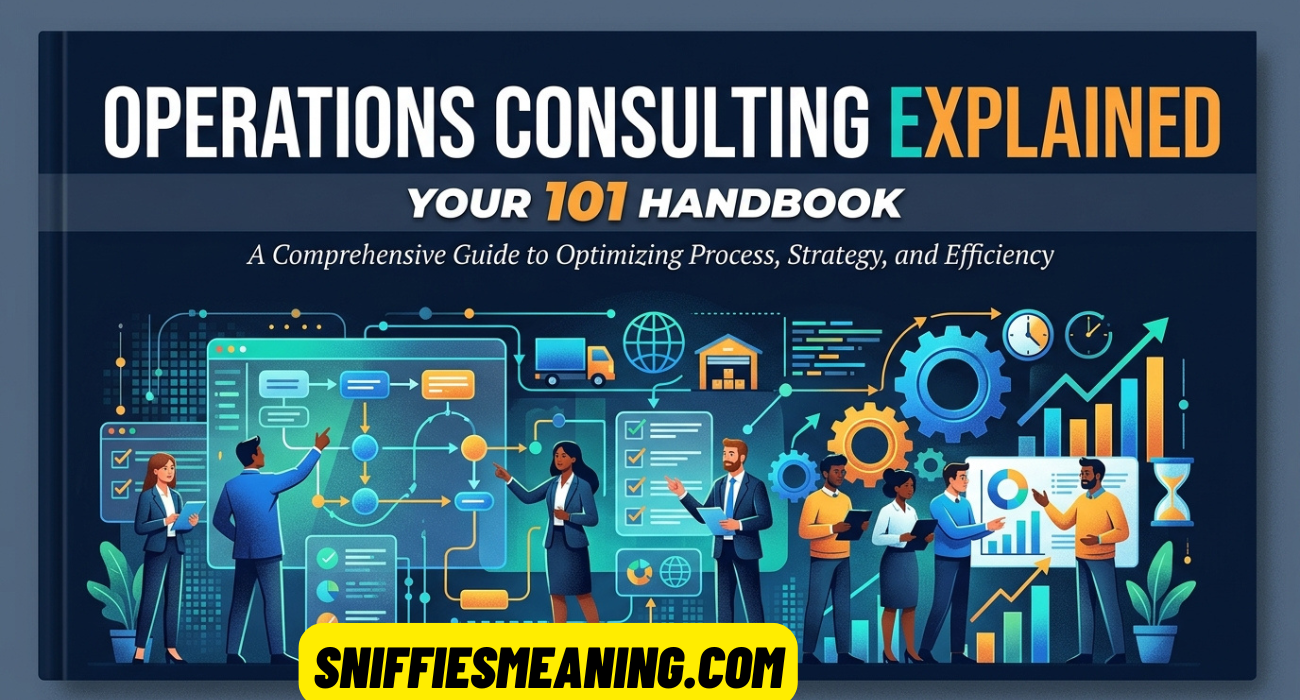
Operations Consulting Explained is a practical starting point for understanding how businesses improve efficiency, reduce operating costs, and deliver better results. Operations consultants help organizations identify problems in their daily processes and develop solutions that support their business goals.
From improving supply chains to redesigning workflows, operations consulting covers many activities that keep a company running smoothly. Consultants work with businesses across industries, including manufacturing, healthcare, retail, technology, and financial services.
This handbook explains what operations consulting involves, which firms offer these services, what projects consultants handle, and how to build a career in the field. You will also learn about the skills employers value, typical career progression, and the factors to consider before choosing this career path.
What Is Operations Consulting?
Operations consulting is a professional service that helps organizations improve how they operate. Consultants examine business processes, identify inefficiencies, and recommend practical changes that improve productivity, quality, service, and cost management.
Unlike advisors who focus mainly on corporate strategy, operations consultants often concentrate on how a business puts its plans into action. They may help a manufacturer reduce production delays, help a retailer improve inventory management, or help a hospital make patient scheduling more efficient.
The work can involve strategic decisions as well as detailed implementation. A consultant might redesign a supply chain, introduce new performance measures, automate repetitive tasks, or help employees adopt a more effective way of working.
For example, imagine a distribution company that regularly delivers orders late. An operations consultant could review warehouse procedures, delivery routes, inventory records, and staffing schedules. After identifying the main causes of delays, the consultant could recommend changes and track whether those changes improve delivery performance.
The goal is not simply to make employees work faster. It is to build processes that help the organization achieve better results consistently.
Read Also : Pedro Vaz Paulo: Business Consulting for Sustainable Growth
Key Focus Areas
Operations consulting covers several interconnected business functions. The exact focus depends on the client’s industry, challenges, and objectives.
Process improvement: Consultants map existing workflows, identify bottlenecks, remove unnecessary steps, and standardize tasks. Methods such as Lean and Six Sigma may help teams reduce waste and variation.
Supply chain management: This area includes sourcing, procurement, production planning, inventory control, warehousing, transportation, and supplier performance. Consultants work to improve the movement of materials and products from suppliers to customers.
Operational strategy: Consultants help businesses decide how to organize their operations to support long-term goals. This may include choosing production locations, redesigning distribution networks, or deciding which activities to manage internally.
Cost reduction and productivity: Consultants analyze operating expenses, labor utilization, equipment performance, and resource allocation. Their aim is to identify sustainable savings without unnecessarily damaging quality, employee well-being, or customer experience.
Technology and automation: Organizations often need help improving enterprise resource planning (ERP) systems, introducing workflow automation, or using data analytics to make better decisions. Consultants assess whether technology solves a genuine business problem before recommending an investment.
Quality management: Consultants help establish consistent standards, reduce defects, investigate recurring problems, and improve compliance with applicable requirements.
Performance management: Businesses need reliable ways to measure progress. Consultants may introduce key performance indicators (KPIs), management dashboards, and regular review processes that connect daily activities with broader business objectives.
Typical Projects
Operations consulting projects vary in size and duration. Some address a single process, while others involve changing how an entire organization operates.
| Project type | What the consultant does | Intended outcome |
|---|---|---|
| Process optimization | Maps workflows and removes bottlenecks | Faster, more consistent work |
| Supply chain improvement | Reviews suppliers, inventory, and distribution | Better availability and fewer delays |
| Cost reduction | Examines spending and resource use | Sustainable operating savings |
| Manufacturing improvement | Reviews production lines and equipment use | Higher productivity and less waste |
| Digital transformation | Assesses systems and automates suitable tasks | Better information flow and efficiency |
| Organizational redesign | Clarifies responsibilities and decision-making | Improved coordination and accountability |
| Service operations | Reviews customer support, scheduling, or service delivery | Better service quality and response times |
A typical engagement begins with a clear business problem. The consultant gathers data, interviews stakeholders, observes current processes, and establishes a baseline for measuring performance.
Next, the team investigates the root causes rather than treating visible symptoms. If a company has high inventory costs, for instance, the underlying issue may be inaccurate demand forecasts, unreliable suppliers, or poor coordination between sales and procurement.
The consultant then develops recommendations, evaluates their feasibility, and helps the client implement suitable changes. Depending on the agreement, the work may include employee training, new technology, revised procedures, and performance monitoring.
A project is most useful when the client can measure the results against an agreed baseline. Relevant measures might include order accuracy, cycle time, operating cost, customer satisfaction, or equipment downtime.
Value Proposition
The main value of operations consulting is its ability to connect business problems with practical, measurable improvements. Companies bring in consultants when they need specialized expertise, an independent assessment, or additional capacity to manage a complex change.
One important benefit is an outside perspective. Internal teams may become accustomed to inefficient procedures or struggle to challenge established assumptions. A consultant can question existing practices and compare them with alternative approaches.
Another benefit is structured problem-solving. Instead of immediately investing in new software or hiring more employees, consultants investigate why the problem exists. This helps decision-makers prioritize changes that address the underlying causes.
Operations consultants can also provide specialized knowledge that a business does not need to maintain permanently. A company redesigning its distribution network may benefit from expertise that would be difficult to justify as a full-time internal role.
However, consulting does not guarantee results. Recommendations may fail when leadership does not support the changes, employees receive inadequate training, data is unreliable, or implementation costs exceed expectations. Consultants also charge fees, and their work requires time from client employees.
Before hiring a firm, businesses should define the problem, agree on measurable objectives, understand the project scope, and establish who will own implementation. They should also distinguish between projected benefits and verified results.
Top Operations Consulting Firms
Operations consulting firms help organizations improve performance, redesign processes, manage costs, and implement business transformations. However, firms differ in their size, industry expertise, consulting methods, and approach to implementation.
Some firms combine operations work with corporate strategy. Others specialize in supply chains, manufacturing, procurement, restructuring, or operational excellence. The right choice depends on the client’s business problem, budget, geographic requirements, and desired level of support.
There is no single firm that is best for every project. A global company managing a complex transformation may need a large multidisciplinary team, while a regional manufacturer may benefit more from a specialist with deep industry knowledge.
Big 3 Consulting Firms
The Big Three, also known as MBB, refers to McKinsey & Company, Boston Consulting Group (BCG), and Bain & Company. These firms are known for management consulting and offer operations-related expertise alongside other advisory services.
McKinsey’s operations practice works on areas such as operational excellence, manufacturing, procurement, supply chains, and business transformation. Its operations work can connect strategic goals with changes to everyday business processes.
BCG supports organizations with operational transformation, supply chain improvement, manufacturing performance, and digital operations. Its broader consulting capabilities can help businesses connect operating-model changes with technology and growth priorities.
Bain offers performance improvement and operational transformation services. Depending on the engagement, the work may involve cost management, procurement, supply chain performance, or helping leadership translate improvement plans into measurable business outcomes.
These firms can be relevant when a project requires senior-level guidance, cross-functional expertise, or coordination across several countries and business units. Their suitability still depends on the specific team, its experience, and the proposed engagement.
They can also be highly competitive employers. Candidates often need strong analytical skills, clear communication, structured problem-solving abilities, and effective case-interview preparation.
Boutique Firms
Boutique consulting firms focus on selected industries, functions, or business problems. They are usually more specialized than broad, multidisciplinary consulting organizations, although their size and service range vary.
An operations-focused boutique may concentrate on supply chain transformation, procurement, manufacturing, lean management, turnaround management, or performance improvement. This specialization can be useful when a client needs practical knowledge of a particular process rather than a broad business review.
For example, a food manufacturer struggling with production waste may benefit from a consultant who understands factory operations, quality controls, equipment utilization, and production scheduling. A boutique specialist with relevant experience may provide a closer fit than a generalist team.
Potential advantages include direct access to experienced consultants, focused expertise, and a more tailored engagement. However, smaller firms may have fewer specialists available for large international projects or highly complex technology programs.
When evaluating a boutique firm, ask about the team’s relevant project experience, implementation approach, references, and ability to support your organization after the initial recommendations.
Industry Specialists
Industry-specialist consulting firms focus on the operational challenges of a particular sector or technical discipline. Their value comes from understanding industry-specific processes, regulations, equipment, supply chains, and performance measures.
Examples include manufacturing consultants who improve production lines, healthcare consultants who redesign patient-flow processes, and logistics specialists who optimize warehouse networks and transportation systems.
Large multidisciplinary firms also offer industry-specific teams. For instance, KPMG provides customer and operations consulting across areas such as manufacturing, logistics, warehouse management, and cost reduction.
The following comparison can help businesses narrow their options.
| Firm type | Best suited for | Main consideration |
|---|---|---|
| Large strategy firms | Complex, high-priority transformations | Team fit, fees, and implementation depth |
| Boutique consultancies | Focused operational problems | Specialist expertise and available capacity |
| Industry specialists | Sector-specific processes and technical challenges | Depth of industry knowledge |
| Independent consultants | Clearly defined projects or expert support | Individual capacity and continuity |
| Large multidisciplinary firms | Projects spanning operations, technology, risk, and organization | Coordination across service teams |
To choose wisely, define the problem before selecting the provider. Request a clear scope of work, identify the people who will deliver the project, and agree on how progress and results will be measured.
How Does Operations Consulting Work?
Operations consulting typically follows a structured process that moves from diagnosis to implementation. The exact stages vary by project, but the objective remains the same: identify the causes of poor performance and develop improvements that the organization can sustain.
1. Diagnose the problem
Review business data, interview employees, observe workflows, and establish a baseline for current performance.
2. Analyze root causes
Identify bottlenecks, unnecessary steps, capacity constraints, inconsistent procedures, and other factors behind the problem.
3. Design improvements
Compare potential solutions, estimate costs and benefits, assess risks, and agree on priorities with the client.
4. Implement the changes
Update procedures, assign responsibilities, introduce suitable tools, train employees, and manage the transition.
5. Measure and sustain results
Compare performance with the baseline, investigate unexpected outcomes, and establish ongoing ownership of the improvements.
Consider a retailer that frequently runs out of popular products while holding excess stock of slow-moving items. A consultant might examine historical sales, supplier lead times, replenishment rules, and inventory accuracy. The resulting plan could include better demand forecasting, revised reorder points, and more frequent reviews of important products.
The consultant would then measure whether stock availability improves without creating unnecessary inventory costs. This approach is more reliable than simply telling the retailer to order more products.
Operations Consulting vs. Strategy Consulting
Operations consulting and strategy consulting overlap, but they address different business questions. Strategy consulting typically helps leadership decide what direction to take. Operations consulting focuses on how the organization can deliver that direction effectively.
| Comparison | Operations consulting | Strategy consulting |
|---|---|---|
| Main question | How can operations perform better? | What should the business do? |
| Primary focus | Processes, costs, capacity, quality, and execution | Growth, markets, competition, and corporate direction |
| Typical activities | Process mapping, operational analysis, implementation | Market research, strategic analysis, business planning |
| Common stakeholders | Operations leaders, managers, frontline teams, executives | Executives, business-unit leaders, investors |
| Common measures | Cycle time, productivity, service levels, operating costs | Growth, market share, profitability, strategic milestones |
| Project outcome | Improved processes and operating performance | Strategic choices and business direction |
The distinction is not absolute. A company entering a new market may hire strategy consultants to evaluate the opportunity and operations consultants to determine how to build the required supply chain, staffing model, and delivery processes.
Many consulting firms offer both services. Some engagements combine them, allowing a business to develop a plan and execute the operational changes needed to make it work.
When Should a Business Hire an Operations Consultant?
Hiring an operations consultant makes sense when a company faces a problem that internal teams cannot resolve efficiently or when it needs specialized expertise for a major change.
Common signs include recurring delays, rising operating costs, declining service quality, unreliable inventory, unclear responsibilities, and processes that struggle to support business growth.
Consulting may also help when a company is integrating an acquisition, expanding into new regions, implementing a major business system, or preparing for a significant operational redesign.
However, external support is not always necessary. A business with a capable internal operations team may be able to resolve a small, well-understood problem without hiring a consultant. An outside engagement is less attractive when leadership has not agreed on the problem, essential data is unavailable, or the organization has no capacity to implement the recommendations.
Before hiring a consultant, ask:
- What specific business problem needs to be solved?
- What does current performance look like?
- Which outcomes will define success?
- What experience does the proposed team have with similar challenges?
- Who will make decisions and implement changes?
- How will the business validate savings or performance improvements?
- What happens when the engagement ends?
Clear answers make it easier to evaluate proposals and avoid paying for recommendations that the organization cannot put into practice.
Career Path in Operations Consulting
A career in operations consulting suits people who enjoy solving business problems, analyzing data, improving processes, and working with different teams. Consultants may work across several industries or develop deep expertise in one area, such as manufacturing, procurement, supply chain management, or service operations.
The profession combines analytical work with practical business decisions. One day, you might analyze warehouse performance in a spreadsheet. The next, you could interview managers, present recommendations to executives, or help employees introduce a new process.
Career opportunities exist at large consulting firms, specialist boutiques, and independent practices. Some experienced operations professionals also move into corporate roles such as operations director, supply chain leader, transformation manager, or chief operating officer.
Read Also : How Strategy Consulting Can Transform Your Business
Education Requirements
A bachelor’s degree is a common starting point for operations consulting positions. However, employers do not all require the same academic background. The best degree depends on the type of consulting you want to pursue.
Relevant fields include:
- Business administration: Builds knowledge of management, finance, organizational behavior, and business processes.
- Industrial engineering: Develops skills in process design, productivity analysis, quality control, and systems optimization.
- Supply chain management: Covers procurement, logistics, inventory planning, and distribution.
- Economics and mathematics: Strengthens quantitative reasoning, modeling, and analytical problem-solving.
- Computer science and data analytics: Supports work involving automation, business intelligence, information systems, and digital transformation.
An MBA can help candidates pursue certain management consulting roles, particularly when they want to move into leadership or already have professional experience. However, it is not a universal requirement for entry-level operations consulting jobs.
Practical experience is equally valuable. Internships, operations management positions, manufacturing roles, business analysis projects, and supply chain assignments can help candidates demonstrate their abilities.
Professional training in Lean, Six Sigma, project management, or data analytics may strengthen a candidate’s profile when it matches the target role. Certifications are most useful when they support real skills rather than replace practical experience.
Skills Needed
Successful operations consultants combine technical knowledge, business judgment, and communication skills. They must understand what the data shows, explain why a problem exists, and help people implement a workable solution.
Consultants interpret operational data, identify patterns, test assumptions, and distinguish root causes from symptoms. Excel and other data-analysis tools are useful for evaluating costs, productivity, and performance.
Knowledge of process mapping, Lean principles, root-cause analysis, and continuous improvement helps consultants design more reliable workflows.
Consultants explain complicated findings in simple language, prepare clear reports, and present recommendations that decision-makers can evaluate.
Operational changes often involve several departments. Consultants need to manage deadlines, coordinate workstreams, monitor risks, and keep projects moving.
Employees and managers may disagree about the cause of a problem or resist a new process. Consultants need to listen carefully, build trust, and explain why changes matter.
Other useful skills include financial modeling, structured problem-solving, time management, attention to detail, and adaptability. Knowledge of SQL, Python, Tableau, Power BI, or enterprise resource planning systems can be valuable for data-intensive projects, although requirements vary by employer.
You do not need to master every tool before entering the field. Start with strong analytical fundamentals, clear communication, and a solid understanding of business operations. Build specialized technical skills as your career develops.
Typical Career Progression
Operations consulting career paths vary by firm, location, and specialization. The following table shows a common progression rather than a universal promotion schedule.
| Career level | Typical responsibilities |
|---|---|
| Analyst or business analyst | Collect data, conduct research, build models, and prepare presentations |
| Consultant or associate | Analyze business problems, manage defined tasks, and develop recommendations |
| Manager or engagement manager | Lead project teams, coordinate client relationships, and oversee delivery |
| Principal or director | Manage major workstreams or client relationships and develop new business |
| Partner or managing director | Lead client accounts, shape firm strategy, develop talent, and oversee commercial performance |
Some firms use different titles, and experienced industry hires may enter at higher levels. Specialist career tracks can also provide progression without following a purely generalist management route.
Early-career consultants often spend substantial time on research, data analysis, and presentation development. As they gain experience, they take greater responsibility for client communication, project planning, and implementation.
Senior consultants must do more than identify operational problems. They need to build client relationships, manage teams, make sound commercial decisions, and help organizations sustain improvements.
McKinsey, for example, describes opportunities in its operations practice for new graduates, experienced consultants, industry experts, and implementation specialists.
What Is the Work Environment Like?
Operations consulting can offer varied assignments and opportunities to learn how different businesses function. However, the day-to-day experience depends on the firm, client, project, and seniority level.
Consultants may work in client offices, factories, warehouses, corporate headquarters, or remotely. Some projects require travel, particularly when consultants need to observe processes or coordinate with teams across several locations. Others involve more desk-based analysis and virtual meetings.
The work can also involve tight deadlines, changing priorities, and long hours during demanding project phases. Consultants must balance careful analysis with the need to make timely recommendations.
People who enjoy teamwork, structured problem-solving, and practical business challenges may find the field rewarding. Those who strongly prefer predictable routines, minimal client interaction, or limited deadline pressure should investigate a firm’s working arrangements before accepting an offer.
How to Prepare for an Operations Consulting Career
You can begin preparing for operations consulting before you apply for your first job. Focus on practical skills that show you can understand a process, use evidence to diagnose a problem, and recommend a realistic improvement.
Step 1: Learn the fundamentals. Study operations management, supply chain principles, process mapping, basic finance, and performance measurement.
Step 2: Practice data analysis. Use spreadsheets to analyze costs, delivery times, inventory levels, or productivity. Learn how to turn raw information into a clear business recommendation.
Step 3: Work through business cases. Practice problems such as reducing warehouse delays, improving customer service, or increasing factory output. Explain your assumptions and show how you would measure success.
Step 4: Gain practical experience. Apply for internships, analyst roles, operations positions, or projects involving process improvement. Real examples help demonstrate your ability to solve problems.
Step 5: Build a focused résumé. Describe achievements with evidence where possible. Instead of writing “helped improve inventory,” explain the problem you addressed, your contribution, and the measurable result if it has been verified.
Step 6: Prepare for interviews. Consulting interviews may assess analytical reasoning, structured problem-solving, communication, and business judgment. Research the specific firm’s interview format because requirements differ.
Step 7: Target suitable employers. Compare firms by their operations specialties, training, project exposure, location, travel expectations, and career-development opportunities.
A practical portfolio can help you explain your approach. For example, create a sample process map for a fictional order-fulfillment business and identify three changes that could reduce delays. Label assumptions clearly and avoid presenting hypothetical results as actual achievements.
FAQs
What is operations consulting in simple terms?
Operations consulting helps businesses improve how they work. Consultants analyze processes, identify inefficiencies, and recommend or implement changes that improve productivity, quality, costs, and service delivery.
What does an operations consultant do daily?
An operations consultant may analyze business data, interview employees, map workflows, research solutions, build financial models, prepare presentations, and coordinate implementation. Daily responsibilities depend on the project and the consultant’s experience.
Which companies are known for operations consulting?
McKinsey & Company, Boston Consulting Group, and Bain & Company offer operations-related consulting. Other options include Deloitte, KPMG, Accenture, Kearney, specialist boutiques, and independent consultants. The best choice depends on the industry and project requirements.
Do you need an MBA for operations consulting?
No. Many entry-level positions accept candidates with relevant bachelor’s degrees. An MBA may be helpful for certain roles or career transitions, but practical experience, analytical ability, and communication skills also matter.
Is operations consulting a good career?
It can be a strong career choice for people who enjoy analytical problem-solving, teamwork, and improving business performance. However, project deadlines, travel, client expectations, and variable workloads may not suit everyone.
What is the difference between operations consulting and operations management?
Operations consulting usually involves advising organizations or helping them implement specific improvements. Operations management involves overseeing the ongoing activities, resources, and teams that keep a business running. Consultants may recommend changes, while operations managers typically own day-to-day performance.
How do operations consultants measure success?
They compare results against an agreed baseline using relevant metrics. Examples include operating costs, production cycle time, order accuracy, inventory turnover, defect rates, and customer wait times. Financial savings should be validated, and improvements should be monitored over time.
Can small businesses benefit from operations consulting?
Yes. Small businesses may use operations consultants to improve inventory control, simplify workflows, manage costs, or prepare for growth. A focused project with clear objectives may be more appropriate than a large, expensive transformation program.
Conclusion
Operations Consulting Explained shows how organizations can improve performance by examining the processes behind their everyday work. From supply chain management and cost reduction to technology adoption and quality improvement, operations consultants help businesses turn problems into practical solutions.
The field also offers varied career opportunities for people with analytical, technical, and communication skills. Large consulting firms, specialist boutiques, and industry-focused practices provide different routes into the profession. The right choice depends on your interests, experience, and career goals.
For businesses, the most important lesson is to define the problem, set measurable objectives, choose the right expertise, and support implementation. For aspiring consultants, building practical skills and learning to communicate evidence-based recommendations provides a useful foundation. Ultimately, successful operations consulting depends on improvements that organizations can measure, maintain, and build upon.