On Friday or In Friday – Which One Is Correct in American English?
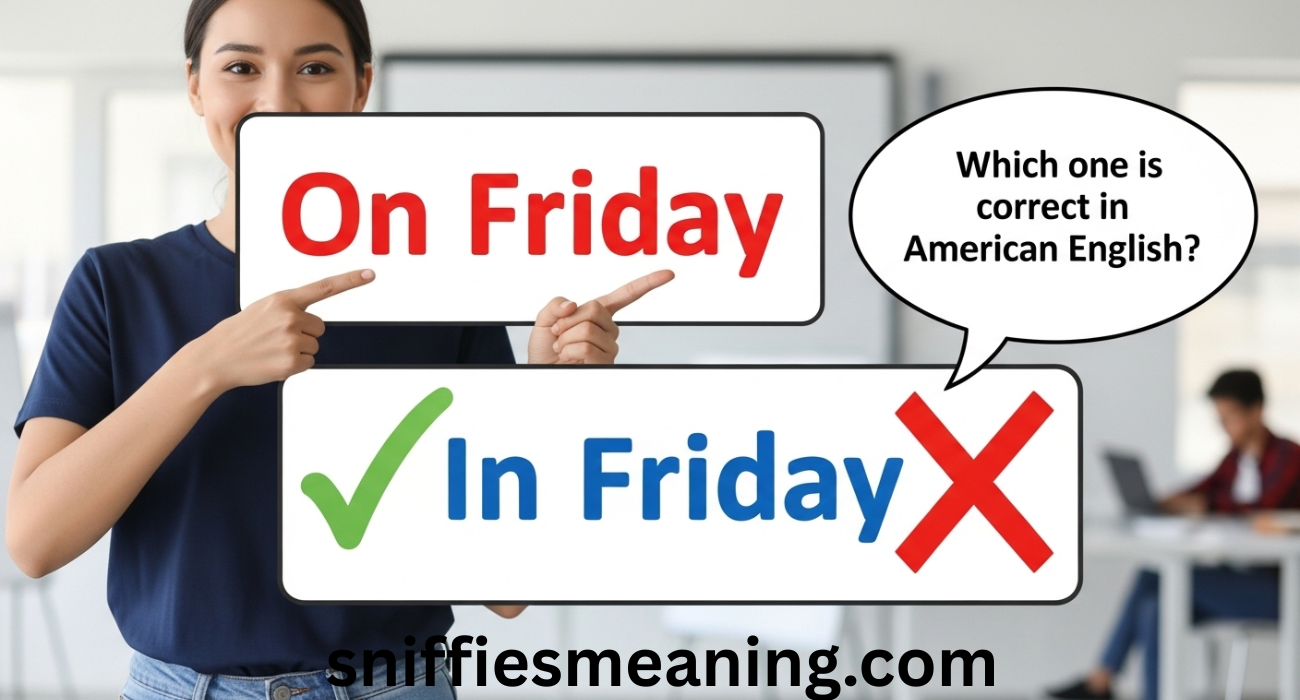
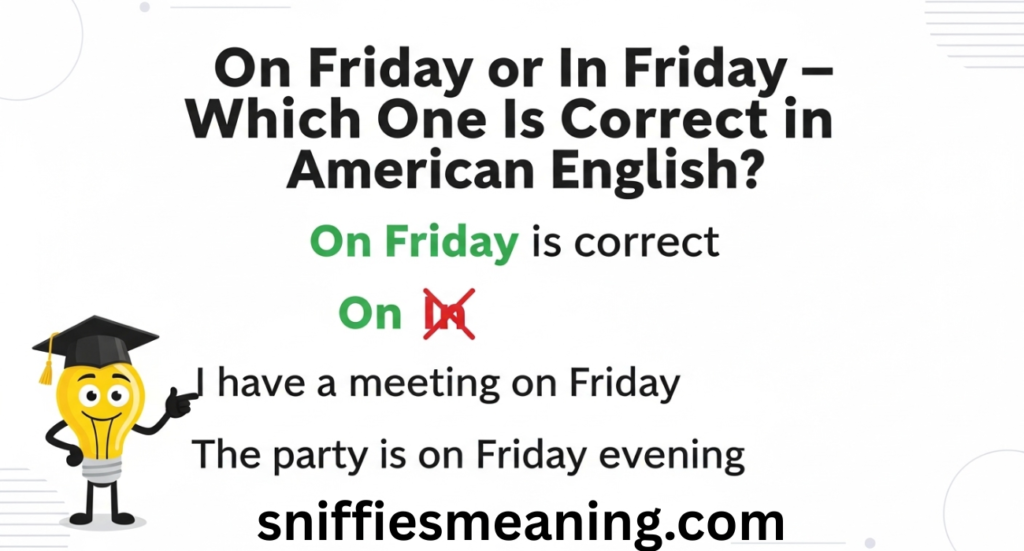
On Friday or In Friday is about using the correct preposition in English. On Friday is right when talking about a specific day. In Friday is wrong in standard American English.
Many people get confused between on Friday and in Friday. Choosing the wrong word can sound strange. Learning the difference makes your English clear.
Using on Friday correctly helps in writing, emails, and talking with friends. It works in formal writing and casual conversation. Practice makes it easy to remember.
Understanding Prepositions in American English

Prepositions are small words, but they carry a big job in English grammar. They show relationships between time points, places, or ideas in sentence construction. In American English, using the right preposition is essential for clarity and correctness, especially for non-native speakers. Words like on, in, and at are often confused, but each has a specific role.
For example, on Friday points to a specific day, while in April covers a month. Using prepositions correctly ensures your communication is professional in emails, reminders, or formal writing. Misusing them can lead to mistakes, affecting how others perceive your grammar skills. Internalizing these rules improves both casual conversation and structured sentence examples in writing or storytelling.
Read Also;Hi There Meaning: Understanding This Friendly Greeting
Why “On” Is Used with Days of the Week
In American English, the preposition on is used before days and dates because it marks a precise time point. For example, we say, “I have a meeting on Friday,” but never “I have a meeting in Friday.” On signals a pin on a calendar, making sentence construction clear in professional communication, weekly planning, or casual reminders.
Using on Friday helps learners avoid common errors. It applies to all days, not just Friday. Saying on Monday or on Wednesday keeps communication natural in emails or casual conversation. Prepositions like in and at have separate uses, referring to months, years, seasons, or exact times, so mixing them up can confuse readers or listeners.
Correct Usage of “On Friday” in Sentences
Using on Friday correctly strengthens sentence construction and grammar skills. In formal writing, you might say, “The board meeting will happen on Friday at 10 AM.” In casual speech, it works in sentences like, “I’ll grab coffee with you on Friday.” This ensures clarity and professional communication, avoiding the unnatural in Friday.
Learners can practice by creating sentence examples for every day. Including on Friday in storytelling, emails, or weekly planning helps internalize prepositions naturally. Using it consistently across formal writing and casual conversation prevents common mistakes and reinforces correctness, making your communication more confident in both personal and professional contexts.
Common Mistakes with Day-related Prepositions
Many non-native speakers confuse on Friday with in Friday, resulting in grammar errors. Saying “I have a test in Friday” is incorrect. Other errors include omitting prepositions in formal writing or misusing at Friday. These common mistakes reduce clarity and make communication sound unnatural in both emails and spoken casual conversation.
The solution is practice and internalizing rules. Students can compare incorrect and correct sentence examples side by side. Creating a simple table of prepositions helps visualize their proper use with days, months, years, or seasons. Over time, proper usage of on Friday in storytelling, weekly planning, and professional communication becomes second nature.
| Preposition | Used For | Example |
| On | Specific days/dates | I’ll meet you on Friday |
| In | Months, years, seasons | We traveled in April |
| At | Exact time | The meeting starts at 10 AM |
Differentiating “On” from Other Time Prepositions
Understanding the difference between on, in, and at improves sentence construction and grammar. On points to specific days or dates, in refers to months, years, or seasons, and at targets an exact time. Mixing them up creates common mistakes that confuse both non-native speakers and native audiences.
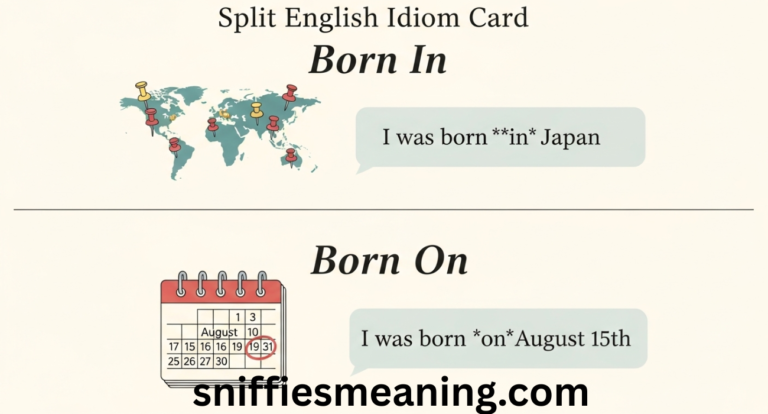
For example, “We got married in 2019” is correct, while “We got married on 2019” is wrong. Visual aids, like a calendar table, help learners see these differences. Using the right prepositions enhances conversational skills, makes emails and storytelling clear, and improves weekly planning by avoiding miscommunication about days, dates, and time points.
Why “In Friday” Is Inaccurate
In Friday is not standard American English. The preposition in covers broader periods like months, years, or seasons, not a single day. Saying “I’ll meet you in Friday” sounds unnatural, confusing non-native speakers and native listeners alike. It also weakens clarity and correctness in both formal writing and casual speech.
Some creative exceptions exist in poetry or song lyrics, where grammar can bend for style. However, in professional communication, weekly planning, or storytelling, always use on Friday. Practicing sentence examples with the correct preposition builds habit and improves your grammar, conversational skills, and confidence in everyday English.
Integrating “On Friday” into Weekly Planning
Using on Friday in weekly planning keeps schedules clear and professional. Whether marking reminders, to-do lists, or emails, this simple preposition helps you stay organized. For example, “Doctor’s appointment on Friday at 3 PM” or “Submit report on Friday morning” communicates precise time points without confusion.
By practicing with all days, learners internalize prepositions naturally. Regularly writing sentence examples for on Friday in storytelling, formal writing, or casual conversation helps prevent common mistakes. Combining this with creative writing or exams exercises reinforces understanding of grammar, correctness, and proper American English usage.
Casual Speech vs. Formal Writing
In casual conversation, dropping the preposition works: “See you Friday” is acceptable among friends. In formal writing, however, always use on Friday. Emails, reports, or school assignments require this precision to maintain professional communication, clarity, and correctness. Choosing the right preposition is key for non-native speakers striving for natural English.
Understanding these differences enhances conversational skills and sentence construction. Practicing on Friday in both contexts strengthens awareness of time expressions, days, and dates. Internalizing the rules ensures you can move seamlessly between casual speech, storytelling, weekly planning, and formal writing without errors.
Enhancing Conversational Skills Through Prepositions
Mastering on Friday improves conversational skills because learners speak more naturally. Practicing sentence examples in casual conversation helps you use prepositions without thinking. Asking friends or recording yourself saying, “I’ll meet you on Friday,” reinforces grammar and correctness while making communication more confident.
Frequent use in storytelling, weekly planning, and emails also improves retention. By including on Friday in daily routines, learners develop an instinct for sentence construction. This builds clarity in professional communication, prevents common errors, and encourages a natural flow of American English in both formal writing and casual speech.
Creative Sentence Construction with “On Friday”
Using on Friday creatively enhances storytelling and keeps writing engaging. For instance, “On Friday, the city streets buzzed with music and laughter” paints a vivid picture. Such sentences improve sentence construction, grammar, and conversational skills, making your English sound natural in emails, reminders, or creative writing projects.
Adding context, metaphors, and anecdotes strengthens communication. “We promised to watch the sunrise on Friday” not only uses the correct preposition but also demonstrates timing, emotion, and clarity. Regular practice in storytelling, poetry, or song lyrics helps internalize rules while maintaining correctness in both formal writing and casual conversation.
Consistency Across All Days of the Week
The rule for on Friday applies to every day. You should always use on with Monday, Tuesday, Wednesday, Thursday, Friday, Saturday, and Sunday in both formal writing and casual conversation. This ensures clarity, correctness, and proper sentence construction across all time expressions and dates.
| Day | Correct | Incorrect |
| Monday | on Monday | in Monday |
| Tuesday | on Tuesday | at Tuesday |
| Wednesday | on Wednesday | in Wednesday |
| Thursday | on Thursday | in Thursday |
| Friday | on Friday | in Friday |
| Saturday | on Saturday | in Saturday |
| Sunday | on Sunday | in Sunday |
Internalizing these patterns strengthens American English skills, prevents common mistakes, and improves communication, emails, and weekly planning. Using on [day] consistently makes sentence construction smooth, natural, and professional.
Common Questions About “On Friday or In Friday”
Many English learners often ask why we say on Friday instead of in Friday. Understanding the distinction helps improve grammar, sentence construction, and communication. American English relies on precise time expressions, and mastering prepositions is key for casual conversation, formal writing, and weekly planning. Knowing the correct usage avoids common mistakes and boosts confidence.
Learning the rule also prevents non-native speakers from sounding unnatural. Practicing with examples, emails, and storytelling reinforces clarity and correctness. You can test yourself by writing sentences for different days, dates, and time points, gradually improving your conversational skills and ability to follow standard English preposition rules in all situations.
How “On Friday” Affects Professional Communication
Using on Friday correctly in emails, reminders, and weekly planning shows professionalism. Misusing in Friday can confuse readers or make communication seem sloppy. Proper sentence construction conveys reliability in American English, while also strengthening your grammar and clarity. Precision in time expressions is essential for formal writing.
Incorporating on Friday in workplace storytelling or presentations enhances conversational skills. When scheduling meetings, sending to-do lists, or sharing dates, the correct preposition ensures smooth communication. Practicing with sentence examples and integrating it into your weekly planning helps internalize rules, prevents common mistakes, and builds confidence in professional contexts.
Visualizing Time: On Friday vs In Friday
Understanding prepositions becomes easier when you visualize days, weeks, and months on a calendar. On Friday points to a specific day, while in Friday incorrectly treats a day as a larger time block. Visualization strengthens grammar understanding and enhances sentence construction, clarity, and conversational skills.
You can draw timelines to see how time expressions work. Highlight each day, mark meetings, or note dates to reinforce correct usage. This approach aids non-native speakers in internalizing rules. Using storytelling, weekly planning, and emails with proper prepositions improves communication and reduces common errors in both casual and formal writing.
Teaching “On Friday or In Friday” to Learners
Teachers often notice students struggle with prepositions in American English. Explaining that on Friday refers to a specific day, while in Friday is incorrect, clarifies grammar and sentence construction. Using examples from emails, storytelling, or weekly planning makes the lesson practical and memorable.
Interactive exercises help learners practice time expressions. Asking them to write sentence examples for days, dates, and months strengthens conversational skills and correctness. Over time, this method reduces common mistakes, enhances clarity, and makes students comfortable with both casual speech and formal writing, improving overall communication confidence.
How to Avoid Preposition Mistakes in English

Many non-native speakers make mistakes with prepositions, especially in time expressions like on Friday. Using the wrong word affects grammar, sentence construction, and communication. Understanding that on is for days and dates helps prevent these common errors and improves both formal writing and casual conversation.
Practical strategies include writing emails, practicing weekly planning, and creating storytelling examples. Reviewing mistakes and correcting them strengthens conversational skills, internalizes preposition rules, and ensures clarity. Repeating exercises for different days and months gradually makes the correct usage of on Friday instinctive and improves American English fluency.
Examples of Correct “On Friday” Usage in Daily Life
Using on Friday in real-life emails, reminders, and storytelling shows mastery of American English grammar. For instance, “I’ll send the report on Friday” or “We’ll visit the museum on Friday afternoon” makes communication precise and professional. These examples strengthen sentence construction, clarity, and correctness.
Practicing with multiple sentence examples for each day reinforces learning. Using prepositions in weekly planning, casual conversation, and professional communication reduces common mistakes. Over time, learners develop conversational skills, understand time expressions, and confidently apply on Friday in both formal writing and storytelling contexts.
The Role of Prepositions in Storytelling
Prepositions like on, in, and at play a big role in storytelling. Saying “The festival happens on Friday” provides clear time points for readers. Misusing in Friday confuses the audience and weakens sentence construction. Correct preposition usage enhances clarity, grammar, and communication, both in American English writing and speech.
Storytelling practice helps internalize rules for days, dates, and time expressions. Using on Friday in narratives, poems, or song lyrics builds conversational skills. Combining these exercises with weekly planning, emails, and real-life examples prevents common mistakes, improves correctness, and strengthens learners’ ability to communicate naturally in English.
Using “On Friday” in Exams and Practice Exercises
Many students face questions on prepositions during English exams. Correctly using on Friday demonstrates mastery of grammar, sentence construction, and time expressions. Practicing with exam-style questions improves conversational skills, clarity, and correctness in formal writing. Avoiding in Friday shows that learners understand standard English rules.
Teachers often suggest creating tables with days, months, and prepositions. Completing exercises with storytelling, emails, or weekly planning builds confidence and reduces common errors. Regular practice ensures learners can instantly choose on Friday in real-life communication, whether in casual conversation or professional writing.
The Impact of “On Friday” on Social Interaction
Correctly saying on Friday improves conversational skills in casual conversation and social settings. Misusing in Friday can confuse friends, colleagues, or classmates. Using prepositions accurately ensures your communication is smooth, clear, and professional. American English relies on correct time expressions for clarity and trustworthiness.
Practicing storytelling, emails, and weekly planning with on Friday reinforces grammar, sentence construction, and correctness. Internalizing rules helps non-native speakers speak naturally, reducing common mistakes. Over time, learners gain confidence in both formal writing and casual speech, improving overall social and professional interactions.
Combining Prepositions with Dates and Events
Understanding on Friday also helps when combining days with dates and events. For example, “We will celebrate the holiday on Friday, August 15th” provides clear time points for planning. Correct preposition usage enhances grammar, clarity, and communication, which is crucial in emails, storytelling, or weekly planning.
Practicing these combinations with sentence examples helps non-native speakers internalize rules. Using on Friday with reminders, to-do lists, and professional communication ensures correctness and prevents common mistakes. Over time, learners naturally master American English prepositions, improving conversational skills and sentence construction across contexts.
FAQs
Which is correct: On Friday or In Friday?
On Friday is correct in American English because it refers to a specific day. In Friday is grammatically wrong.
Can I ever use In Friday?
Only in creative contexts like poetry or song lyrics. In everyday formal writing or emails, never use it.
Why do we always say On Friday in English?
Because on is used for specific days and dates, while in is for months, years, or seasons.
Is it okay to drop ‘on’ in casual speech?
Yes, in casual conversation, you can say “See you Friday,” but formal writing still requires on Friday.
Conclusion
The phrase “On Friday or In Friday” shows a common mistake that many learners make. Always use on Friday when talking about a specific day. Using in Friday is not correct in standard American English. Writing and speaking correctly helps students communicate clearly and avoid common mistakes. Learning small rules like this builds good habits in grammar, sentence construction, and time expressions.
Using on Friday correctly makes emails, reminders, and daily plans easy to understand. Practicing this phrase in casual conversation, storytelling, and weekly planning improves confidence and conversational skills. Understanding “On Friday or In Friday” prepares students for formal writing and helps them speak naturally in English.