Born in or Born On – How to Use Them Correctly in English
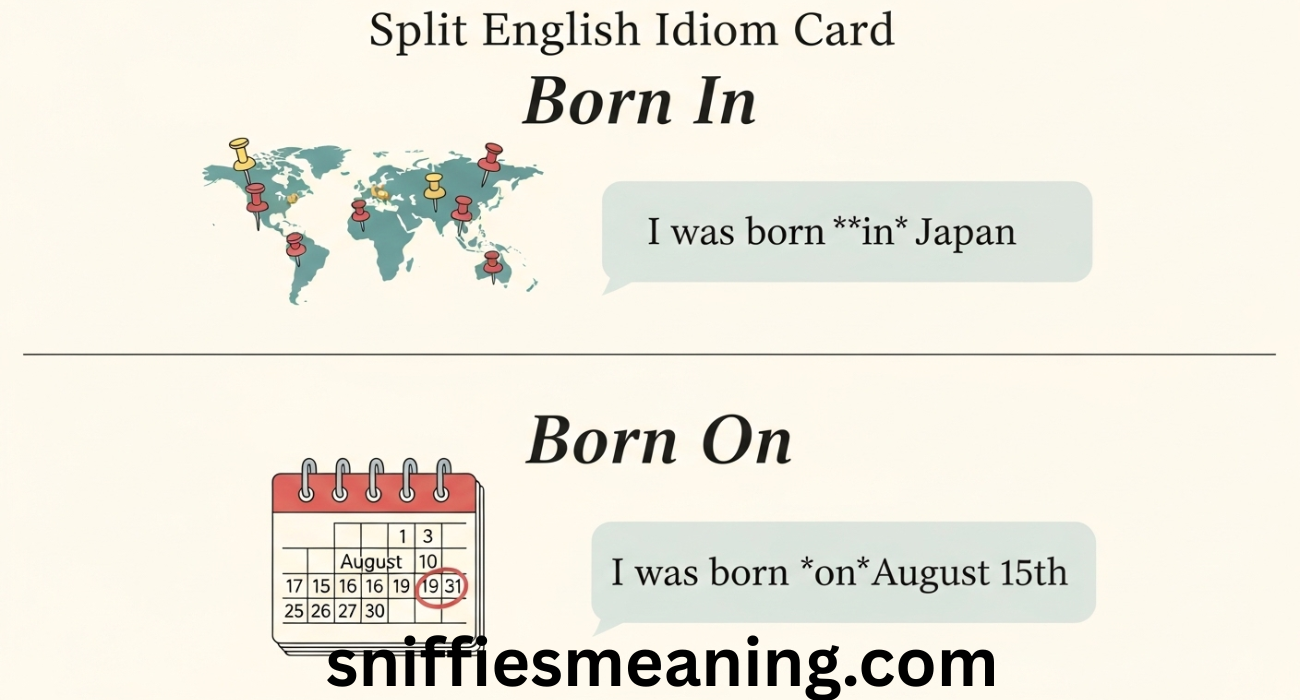
Born in or Born On are common phrases in English. They are prepositions used to talk about birth time. Born in shows months, years, or places. Born on shows exact days and dates. These rules help form correct sentences.
Many students feel confused about Born in or Born On. They mix months with days. Small mistakes can change the meaning. Learning the right use is very important. Clear grammar makes your English sound better.
Born in or Born On follows simple grammar rules. You use born in for time periods and locations. You use born on for exact calendar dates. These patterns appear in daily speech and writing. Practice helps you use them correctly every time.
Understanding the Grammar of ‘Born in’ vs. ‘Born on’
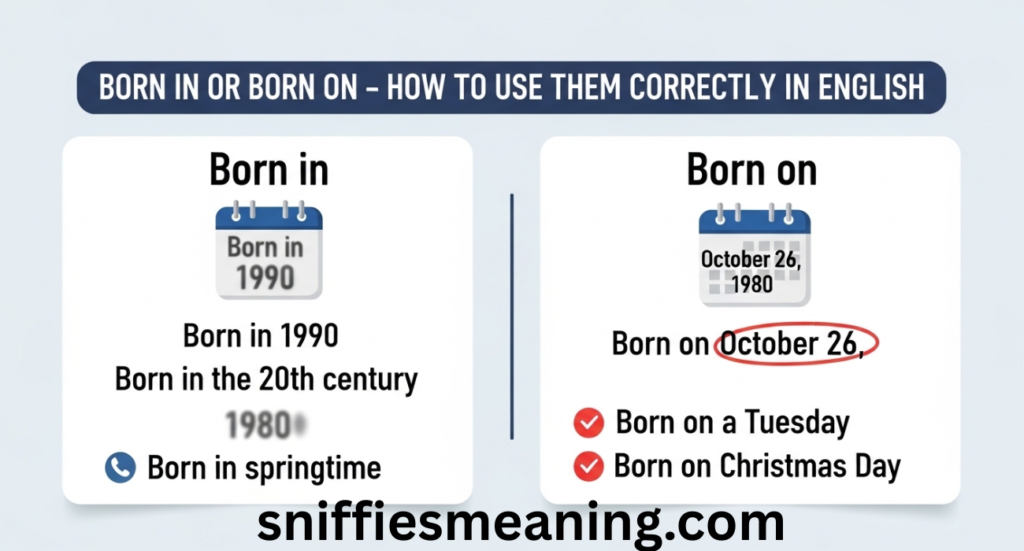
The difference between born in and born on comes down to prepositions and contextual nuances in usage. Born in is used for months, years, seasons, and places, while born on is reserved for specific days, exact dates, and holidays. Misusing these prepositions is one of the most frequent mistakes English learners make. Properly understanding time expressions and location reference can improve your writing precision and make everyday English usage sound natural.
When choosing the right preposition, think about the day versus month distinction and whether your sentence refers to a broad period or a specific date. Incorrect usage, like saying “born on 1990” instead of “born in 1990,” is a common error that can confuse your audience. Following grammar rules carefully and using real-life examples or case studies makes it easier to remember the difference. These rules also appear in celebrity biographies, social media, and formal records, reinforcing proper usage.
Read Also;“Input” or “Imput”: Which One Is Correct and Why It Matters
Using ‘Born in’ for Time
Years
We use born in when talking about years or decades because they represent a broader time frame rather than a specific day or date. For example, you would say, “Albert Einstein was born in 1879” or “Oprah Winfrey was born in 1954.” Using born on with a year is always incorrect because it points to a precise calendar reference, which doesn’t exist for an entire year.
This rule also applies to centuries or historical time frames, making preposition usage important in history writing and educational materials. Understanding this distinction reduces mistakes in both spoken English and written English, especially when referencing birth years in case studies or celebrity biographies. Remembering this mnemonic: “in for broad time, on for exact dates” helps avoid confusion.
Months
When specifying birth months, born in remains correct. For example, “She was born in December” or “He was born in May.” Months indicate a broader time frame, not a specific day, so using born on would create incorrect usage. This also applies to informal posts on social media, where people often drop prepositions entirely, which can sound unnatural or confusing.
Correct use of born in for months ensures clarity in writing precision and prevents common misconceptions. In formal contexts, such as school records or official biographies, adhering to these rules strengthens communication confidence. Understanding how time expressions like months and seasons work improves contextual usage, making your sentences sound smooth and professional.
Seasons
For seasons, always use born in because they cover extended time frames, like “They were born in summer” or “Many Americans are born in spring.” Saying “born on summer” is an incorrect usage that violates basic grammar rules. Seasons are broader than specific dates, and using born in aligns with proper preposition usage in both formal records and casual speech.
Seasons often appear in case studies about weather-related birthdays or cultural events. Knowing the difference between seasonal references and exact dates improves your spoken English and writing precision. U.S.-specific examples, like “born in fall before Thanksgiving,” help learners relate this grammar rule to real-life everyday English usage.
Using ‘Born on’ for Specific Dates
Days of the Week
When referring to days of the week, always use born on. For instance, “She was born on Monday” or “He was born on Friday.” This rule clarifies date specification in casual speech, social media, or formal records. Using born in with a day of the week is a frequent mistake among learners of English grammar.
Knowing how to match prepositions to specific days ensures proper contextual usage. Americans often share birthday greetings online, and using born on with a day improves writing precision and shows communication confidence. Misusing this rule can create confusion in celebrity biographies or case studies that rely on exact dates.
Full Dates
For full dates, the preposition born on is essential. For example, “Barack Obama was born on August 4, 1961” or “Princess Diana was born on July 1, 1961.” Including the exact date provides clarity in written English, ensuring your readers know you mean a specific day versus month. Saying “born in July 4, 1961” is incorrect usage and can mislead readers.
Full dates often appear in real-life examples, like newspapers, celebrity biographies, or case studies. Correct use improves contextual nuances in usage and prevents errors in formal records. This is especially important in the U.S., where the calendar reference format follows month-day-year.
Special Occasions
For holidays or commemorative days, use born on. For instance, “She was born on Christmas Day” or “He was born on New Year’s Eve.” These exact dates require preposition usage that matches the event rather than a broad time frame. Misusing in here leads to common misconceptions and may sound unnatural in everyday English usage.
Special occasions are widely used in social media posts, case studies, and celebrity biographies. Understanding the distinction ensures writing precision and strengthens your communication confidence. Examples like “born on Thanksgiving Day” help learners remember the rules in a memorable way.
Using ‘Born in’ for Places
When talking about countries, states, cities, or regions, always use born in. For example, “She was born in California” or “He was born in New York City.” Using at is only appropriate for specific buildings or hospitals, such as “She was born at St. Mary’s Hospital.” Knowing location reference is critical for proper grammar rules and avoiding mistakes.
This rule applies in formal records, celebrity biographies, and real-life examples of U.S. regions. Misplacing the preposition can make sentences unclear or incorrect. Understanding the difference between broad versus exact locations improves writing precision and spoken English, helping learners use English grammar naturally and confidently.
Regional Clarifications
Some regions in the U.S. have unique contextual nuances in usage. For example, small towns or neighborhoods may still require born in, while specific clinics or buildings use at. Examples include “born in the Midwest” versus “born at Mount Sinai Hospital.” Using the correct preposition aligns with formal usage and casual speech, ensuring clarity in written English and spoken English.
Understanding these regional clarifications also prevents common misconceptions and improves communication confidence. Learners can compare broad versus exact locations to internalize preposition usage, which is important for everyday English usage and social media posts about birthdays or life events.
Contextual Nuances in Usage
Sometimes context determines whether to use born in or born on. Formal records strictly follow the rules, while casual speech may bend them slightly. For example, someone might say “Born July 4” on social media, skipping the preposition. Understanding these contextual nuances in usage improves writing precision and spoken English, especially in U.S.-based communications.
Awareness of formal usage, informal usage, and the difference between broad versus exact locations is essential. By studying real-life examples, case studies, and celebrity biographies, learners can see how prepositions adjust depending on context, enhancing clarity in writing and communication confidence.
Common Mistakes and Misconceptions
The most frequent mistakes with born in vs. born on involve using on for months or seasons and in for specific dates. For example, saying “born on March” or “born in Monday” is incorrect. Other common misconceptions include confusing at and in for small versus large places.
Correcting these errors improves both spoken English and written English. Reviewing real-life examples, case studies, and celebrity biographies helps learners identify patterns in preposition usage. Knowing these grammar rules also improves your confidence when referencing birth dates, birth months, birth years, holidays, and days of the week.
Table of Common Errors
| Incorrect Usage | Correct Usage | Explanation |
| Born on 1990 | Born in 1990 | Years require in |
| Born in Monday | Born on Monday | Days require on |
| Born at Paris | Born in Paris | Cities use in |
| Born on winter | Born in winter | Seasons require in |
This table highlights the most common errors in preposition usage and clarifies the day versus month and broad versus exact locations distinctions. It’s a quick reference for everyday English usage and formal records.
Real-Life Examples and Case Studies
Celebrity Biographies
Taylor Swift was born on December 13, 1989, in Reading, Pennsylvania, following correct preposition usage. Barack Obama was born on August 4, 1961, in Honolulu, Hawaii. These celebrity biographies provide clear examples of born in for places and born on for dates. Misreporting these details can create common misconceptions and errors in formal records.
Social Media Misuse
Many users write “I was born on July” on Instagram or Facebook. Proper grammar rules dictate “I was born in July” because months represent a broad time frame. Understanding these mistakes improves writing precision in casual speech and everyday English usage, helping learners avoid unnecessary errors.
Case Study
A newspaper once wrote, “The famous artist was born on 1972 in New York.” The correct phrasing is “The famous artist was born in 1972 in New York.” This shows the importance of following preposition usage for years and places, and how contextual nuances affect written English.
Influence of Popular Culture
Movies, TV shows, and social media captions often shape how Americans use born in and born on. Informal captions may drop prepositions entirely: “Born July 4.” However, formal records like biographies or official announcements follow proper grammar rules. Understanding the popular culture influence helps learners identify casual speech versus formal usage, reinforcing writing precision and communication confidence.
Tips to Remember the Rules Easily
A simple mnemonic can help: “In for broad time or place, On for exact day or date.” Years, months, and seasons require born in, while days, exact dates, and holidays use born on. Places follow born in, and specific buildings or hospitals use born at. Using time frames, seasonal references, and location references correctly improves spoken English, written English, and everyday English usage.
Quick Checklist
When writing, ask yourself: Is it a year, month, season, or place? Then use born in. Is it a day of the week, exact date, or holiday? Then use born on. Is it a specific building or hospital? Use born at. This quick checklist ensures proper grammar, reduces errors, and strengthens your communication confidence in spoken English and written English.
Why “Born in or Born On” Matters in Everyday English Usage
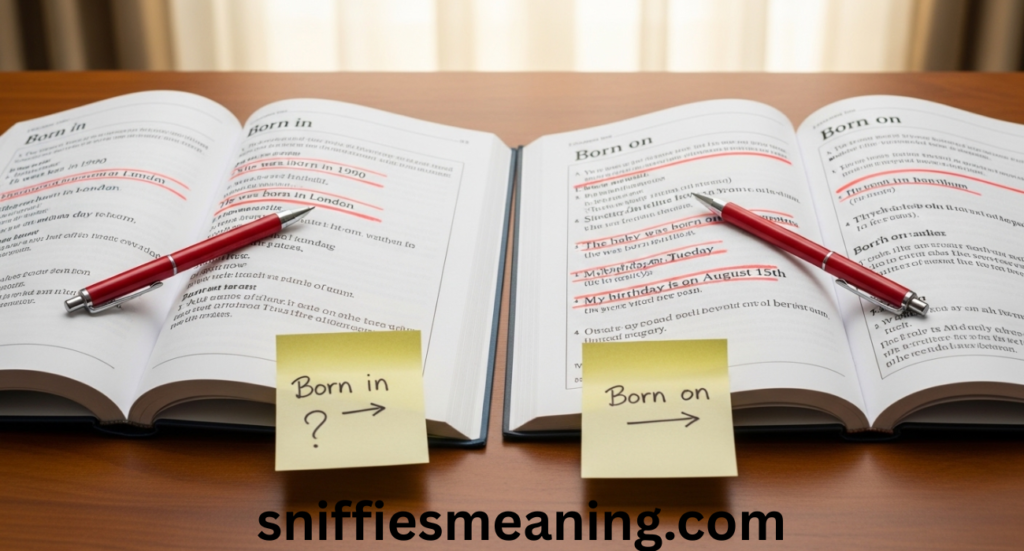
When you use born in or born on correctly, your sentences feel clear and natural. This small detail plays a big role in everyday English usage, especially when talking about birth dates, birth months, and birth years. Many learners overlook this, yet it directly affects communication confidence and how others understand your message in both casual and formal situations.
For example, imagine telling someone you were “born on 1995.” It sounds odd because it breaks basic grammar rules. Correct preposition usage improves both spoken English and written English, making your ideas easier to follow. Over time, practicing these patterns helps you avoid mistakes and develop strong habits for accurate and natural communication.
How Native Speakers Use “Born in” vs “Born On” Naturally
Native speakers rarely think about prepositions, yet they use born in and born on correctly because of exposure. They instinctively understand time expressions, distinguishing between broad time frames like months and exact dates like specific days. This natural flow comes from repeated listening and speaking in real-life situations.
You can build this same instinct by paying attention to real-life examples, including conversations, movies, and social media posts. Notice how Americans say “born in July” but “born on July 4.” This awareness sharpens your understanding of contextual usage and helps reduce common misconceptions in daily communication.
The Role of Prepositions in English Grammar Clarity
Prepositions like in, on, and at may seem small, yet they shape the meaning of sentences in English grammar. Using the wrong one can confuse readers or listeners, especially when talking about specific dates or places. Clear preposition usage ensures your message stays precise and easy to understand.
For instance, saying “born at New York” instead of “born in New York” creates confusion about location reference. Correct usage supports writing precision and improves clarity in writing, whether you are filling out forms, writing essays, or posting online. Mastering these small details makes a big difference.
Simple Patterns to Master “Born in or Born On” Quickly
Learning patterns makes it easier to remember when to use born in or born on. Think of in as covering larger time frames like years, months, and seasons, while on focuses on exact dates and days of the week. This simple distinction helps you avoid frequent errors in everyday communication.
Practicing with consistent examples strengthens your understanding of day versus month and date specification. Over time, these patterns become automatic, improving your spoken English and written English. Repetition, along with a clear mnemonic, builds confidence and reduces hesitation when forming sentences.
Common Situations Where Learners Get Confused
Many learners struggle with born in and born on when switching between months and specific days. For example, saying “born on March” instead of “born in March” is a common mistake. These errors often happen because learners translate directly from their native language instead of following English grammar rules.
Another confusing area involves places and building locations, such as choosing between in and at. Understanding broad versus exact locations helps solve this issue. By focusing on correct usage and practicing real-life examples, learners can avoid these traps and improve their overall communication confidence.
How Context Changes the Meaning of Prepositions
Context plays a powerful role in choosing between born in and born on. In formal usage, such as official documents or celebrity biographies, grammar rules are strictly followed. However, in informal usage, especially on social media, people sometimes shorten phrases or skip prepositions altogether.
For example, a caption might say “Born July 4,” which is acceptable in casual speech but not in formal writing. Understanding these contextual nuances helps you adapt your language based on the situation. This flexibility improves both writing precision and your ability to communicate effectively.
Real Benefits of Using Correct Grammar in Communication
Using proper grammar with born in and born on improves how people perceive your English skills. Clear and accurate sentences make you sound more confident and professional, whether you are speaking or writing. This is especially important in academic work, job applications, and formal records.
Correct preposition usage also prevents misunderstandings. When you use accurate time expressions and location references, your message becomes easier to follow. Over time, this attention to detail enhances your everyday English usage and helps you communicate ideas with clarity and confidence.
Comparing Formal and Informal Usage in Real Life
In formal usage, such as essays or reports, following strict grammar rules is essential. You must write “born in 1990” or “born on July 4” to maintain writing precision. These forms appear in case studies, celebrity biographies, and official documents across the United States.
In contrast, informal usage allows more flexibility. On social media, people often simplify language, writing “Born July 4” without a preposition. While this works in casual settings, sticking to correct usage ensures clarity and avoids common misconceptions, especially in professional communication.
Understanding Time and Place Together in Sentences
Sometimes, sentences include both time expressions and places, requiring careful use of prepositions. For example, “She was born on July 4, 2000, in California” combines both rules correctly. Mixing them up leads to errors that affect clarity and meaning.
Balancing date specification and location reference strengthens your understanding of English grammar. This skill is useful in storytelling, case studies, and everyday conversations. With practice, you’ll naturally choose the right structure, improving both spoken English and written English.
Building Confidence with Practice and Real Examples
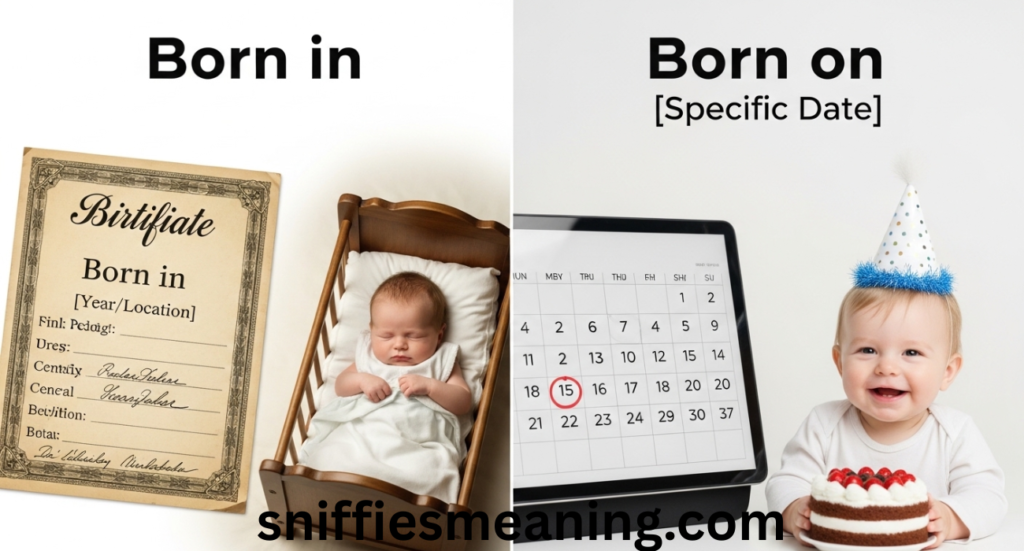
Confidence grows when you practice using born in and born on with real situations. Reading celebrity biographies, watching interviews, and analyzing real-life examples help you see how native speakers apply these rules naturally. This exposure reinforces correct usage over time.
You can also create your own sentences using birth dates, months, years, and places. This hands-on approach improves communication confidence and reduces hesitation. By focusing on consistent practice and understanding contextual usage, you’ll master these prepositions and use them effortlessly.
FAQs
When should I use born in instead of born on?
Use born in for months, years, seasons, and places because they describe broader time frames or locations, not exact dates.
When is it correct to use born on?
Use born on for specific days, exact dates, and holidays since these refer to precise points in time.
Can I use born in for places like cities or countries?
Yes, born in is correct for countries, states, cities, and regions, as it shows a general location.
Why do people make mistakes with born in vs born on?
Many learners confuse time expressions and preposition usage, especially when translating from another language or using informal speech.
Conclusion
Born in or Born On helps you use English in a clear and correct way. You use born in for months, years, seasons, and places. You use born on for specific days and exact dates. These simple rules guide your writing and speaking. When you follow them, your sentences sound natural and easy to understand. This skill improves both school work and daily communication.
Practice these rules often to build strong habits. Read examples and write your own sentences with care. Focus on correct prepositions and clear meaning each time. Good grammar shows discipline and attention to detail. When you master Born in or Born On, you speak with confidence and write with clarity. This knowledge supports success in learning and communication.