
Take Affect vs Take Effect – What You Need to Know in 2026
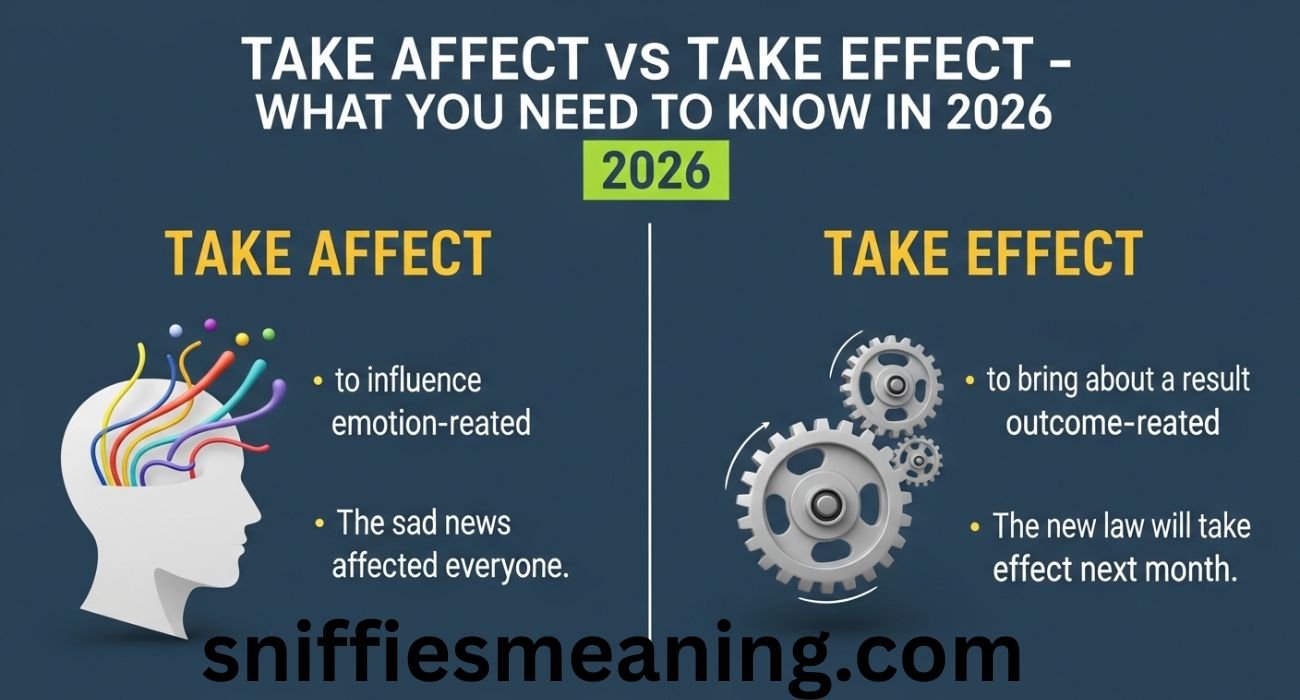
Take Affect vs Take Effect can confuse many people. Take effect means something starts working or becomes active. Take affect is wrong because affect is a verb that means to influence.
Many students, writers, and even native speakers make mistakes with these words. It can happen in emails, reports, or posts. Knowing the difference makes writing clear and correct.
The correct use of Take Affect vs Take Effect shows professionalism. Rules, laws, and policies always take effect at a certain time. Learning the difference avoids confusion and common mistakes.
Take Affect or Take Effect – Quick Answer

If you’ve ever wondered whether to write take affect or take effect, you are not alone. Even native speakers and writers often make this common mistake in emails, reports, and posts. The correct phrase is take effect, which refers to something beginning to work, becoming active, or valid. The word affect, on the other hand, is a verb that means to influence, so it never fits after “take.”
For example, you might say, “The new policy will take effect on Monday,” or “The medicine took effect within an hour.” Saying, “The new rules will take affect tomorrow” is grammatically incorrect. Understanding this difference ensures clarity in professional writing, avoids common mistakes, and makes your writing more confident for a global audience.
Read Also;Too Many or To Many — Easy Grammar Guide to Avoid Common Mistakes
The Origin of “Take Effect”
The phrase take effect has roots in Latin. The word effect comes from effectus, meaning accomplishment or execution, while affect comes from afficere, meaning to influence or act upon. During Middle English, “take effect” was commonly used in law and governance to describe a result or outcome that begins to happen. Over time, English separated affect as a verb and effect as a noun, which is why only take effect makes sense in modern usage.
Knowing the origin also helps students, professionals, and writers remember the correct usage. The phrase evolved in formal communication, policy, and medicine, showing up in rules, regulations, and instructions where something must begin working immediately. Simple examples like “The law will take effect next April” make the meaning easy to understand.
British English vs American English Spelling
Both British English and American English agree that the correct spelling is take effect. There is no regional difference in spelling for this phrase, though context of usage may vary slightly. For example, in law and policy writing, Americans and Brits often use it similarly, while minor differences appear in casual emails or social media posts.
Here’s a quick table to illustrate common contexts:
| Usage Area | British English | American English | Example |
| Legal & Policy | Common | Common | “The tax changes will take effect on April 1.” |
| Medicine | Common | Common | “The vaccine will take effect in two weeks.” |
| Formal Communication | Common | Common | “The new rules take effect immediately.” |
Even for a global audience, using take effect ensures clarity, correctness, and avoids confused usage across UK, US, Canada, Australia, and beyond.
Which Spelling Should You Use?
If you are writing for a USA audience, always use take effect. It describes something beginning to operate, becoming active, or becoming valid. Using take affect is never correct in modern English and is usually a typo or misunderstanding. Remember, affect works only as a verb, such as “The new system will affect the company.”
In professional writing, sticking to the correct phrase shows clarity, correctness, and ensures that rules, policies, or environmental measures are communicated properly. Students, writers, and professionals can easily recall the difference with a simple rule: affect = action, effect = end result. Using this tip helps reduce common mistakes and maintains proper grammar in all formal communication.
Common Mistakes with “Take Effect”
Many native speakers and writers confuse take affect and take effect, leading to mistakes in emails, reports, and posts. For instance, saying, “The weather takes affect my mood” is wrong because affect is a verb, and take cannot combine with it. Correct usage would be, “The weather affects my mood.”
Other common mistakes appear in rules, policy, and company systems, where writers mistakenly pair take with affect. Remembering the difference between verb and noun usage, along with the origin of the words in Latin and Middle English, helps avoid confused usage. Professionals can follow simple examples to maintain clarity, avoid typos, and ensure correctness across all types of writing.
“Take Effect” in Everyday Examples
You see take effect in many everyday examples, from social media posts to formal emails. For instance, daylight saving time often takes effect over a weekend, and company merger agreements take effect once shareholders approve them. Laws, environmental regulations, and policy changes also begin working immediately after they take effect.
Even students and professionals writing quick guides or mobile-friendly instructions benefit from understanding these simple examples. Whether it’s in emails, reports, or posts, using take effect correctly communicates the outcome clearly. Understanding when something becomes active or valid ensures your writing is professional and avoids misunderstandings.
“Take Affect or Take Effect” – Google Trends & Usage Data
According to Google Trends, the phrase take effect dominates searches in the US, UK, Canada, and India, while take affect mostly appears due to typos or misunderstandings. Over 95% of searches worldwide show popularity for the correct phrase. Professionals, students, and writers can rely on these trends to improve clarity, correctness, and grammar in their writing.
Here’s a simple table to show correctness and popularity:
| Phrase | Popularity | Correctness | Common Use |
| Take effect | ⭐⭐⭐⭐⭐ | ✅ Correct | Law, formal writing, everyday examples |
| Take affect | ⭐ | ❌ Incorrect | Typos, misunderstandings |
Understanding the Difference Between Affect and Effect
The words affect and effect often confuse native speakers, students, and writers. Affect is a verb used to influence or change something, while effect is a noun representing a result or outcome. Misusing them in emails, reports, or posts can reduce clarity and professional correctness in both American English and British English.
Knowing the difference helps ensure your writing communicates the intended meaning. In law, policy, and medicine, using the correct term shows precision and avoids confused usage. Simple examples like “The system will affect operations” versus “The policy will take effect tomorrow” demonstrate proper grammar, usage, and professional writing.
Why Take Effect is Always Correct After Take
Only take effect works after take, because effect is a noun. Using take affect is grammatically incorrect, even in casual social media or emails. Native speakers and professionals sometimes slip, but remembering that affect is a verb ensures clarity, correctness, and proper usage in formal communication.
For students and writers, practicing simple examples improves grammar and reduces common mistakes. The phrase shows when rules, laws, or systems begin working or become valid, like “The environmental regulation will take effect immediately.” Proper spelling and context make your writing professional and easily understood by a global audience.
Common Misunderstandings About Take Affect
Many people mistakenly write take affect because they confuse the verb and noun forms. Even professionals in law, policy, and medicine sometimes make this common mistake. Misusing the phrase can create confused usage in reports, emails, and posts, making your writing less clear and precise.
Remember that affect is an action, while effect is the end result. Using take effect correctly ensures that rules, systems, or policies are shown as active, operating, and valid. Learning the origin, proper usage, and examples helps avoid typos, improves clarity, and strengthens your professional writing in both American English and British English.
How to Remember Take Affect vs Take Effect

A simple trick is to remember: affect = action, effect = end result. Students, writers, and professionals can use this tip to avoid common mistakes in emails, reports, and posts. Thinking about the meaning and grammar ensures your writing shows clarity, correctness, and proper professional communication.
Another helpful approach is to practice everyday examples. For instance, “The new rules take effect next Monday” or “The changes affect the company’s workflow.” These examples highlight the difference, demonstrate proper usage, and reduce misunderstanding among a global audience.
Take Effect in Legal and Policy Writing
In law and policy, take effect is widely used to show when regulations begin working or become valid. Writing “The law will take effect April 1” clearly communicates outcome and avoids confused usage. Native speakers and professionals must use the correct phrase in reports, emails, and posts to maintain clarity.
Using take affect in legal writing is always wrong because it misrepresents the noun and verb distinction. Following proper grammar and spelling ensures professional writing, avoids common mistakes, and keeps communication clear. Knowing the origin, examples, and meaning of take effect helps you write confidently for any audience.
Everyday Situations Where Take Effect Appears
You see take effect in everyday examples, from social media posts to emails, policy updates, and news headlines. For instance, daylight saving time often takes effect over the weekend, and company systems take effect after shareholder approval. These examples show results, outcome, and proper usage in modern English.
Understanding take effect in common situations helps students, writers, and professionals avoid common mistakes. Using the correct phrase ensures clarity, correctness, and professional writing. Even casual communications benefit from proper grammar and spelling, which prevents confused usage and improves understanding for a global audience.
Impact of Take Affect Misuse on Communication

Using take affect instead of take effect can confuse readers and reduce clarity in emails, posts, or formal communication. Students and writers often make this mistake because native speakers sometimes misuse the words in everyday writing. This error can lead to misinterpretation of rules, systems, or company policies.
Professional writing must always prioritize correctness and grammar. Understanding the difference between verb and noun, along with practical examples, helps avoid misunderstandings. Using take effect correctly communicates results, outcome, and when something begins operating or becomes valid, enhancing clarity for a global audience.
Take Effect in Social Media and Online Writing
Many writers, students, and professionals post updates on social media about rules, policies, or events that take effect immediately. For example, “The new privacy settings take effect today.” Using take affect in such contexts leads to typos, misunderstandings, and a loss of clarity, especially for a global audience reading emails, reports, or posts.
Correct usage ensures your writing is clear and professional, even in informal platforms. It reinforces the difference between affect (action) and effect (end result). Practicing these examples in daily writing improves grammar, correctness, and overall professional communication in American English and British English.
Professional Writing Tips for Take Affect vs Take Effect
In professional writing, using take effect correctly demonstrates clarity, correctness, and understanding of grammar. Whether writing policy reports, emails, or system updates, the correct phrase communicates when something begins working, becomes active, or becomes valid. Misusing take affect can cause confusion for students, writers, or professionals.
To remember the difference, focus on the meaning of affect as an action and effect as a result. Using simple examples in everyday writing, like company updates or environmental regulations, ensures correct usage. This keeps native speakers and global audiences informed and confident in understanding your writing.
Case Studies Demonstrating Correct Usage

A company merger often demonstrates proper take effect usage. When shareholders approve, the merger takes effect, and the system becomes active. Miswriting take affect in this context creates confusion, reduces clarity, and may mislead readers about rules or outcomes. Studying such examples helps writers and students understand proper grammar and professional writing.
Similarly, environmental regulations often take effect nationwide at a specific date. Using take affect instead leads to common mistakes and misinterpretation. These case studies reinforce correctness, show the origin and meaning of the words, and provide practical tips for emails, reports, and social media communication.
FAQs
What is the difference between take affect and take effect?
Take effect means something begins working or becomes active/valid, while take affect is grammatically incorrect because affect is a verb meaning to influence.
Can I use take affect in formal writing?
No. In formal communication, reports, or policy writing, only take effect is correct for clarity and correctness.
How can I remember when to use take effect?
Think: affect = action and effect = end result. Use take effect when describing a result or when rules begin working.
Why do people confuse take affect and take effect?
Many native speakers, students, and writers mix them because they sound similar, and some make a typo or misunderstanding in emails, posts, or reports.
Conclusion
Take Affect vs Take Effect helps you write clearly and correctly. The phrase take effect shows when something starts working, becomes active, or valid. Using take affect is always wrong because affect is a verb that means to influence. Students, writers, and professionals should remember that correct grammar and proper usage make writing easier to read and understand. Following simple examples, like “The rules take effect tomorrow,” helps you avoid mistakes in emails, reports, and posts.
Learning the difference between Take Affect vs Take Effect also improves your confidence in writing. Knowing the origin, meaning, and everyday use ensures clarity in school, work, and professional communication. Correct usage shows attention to detail and helps readers trust your words.