Crying Face Emoji Meaning: What 😢 Really Means in Texts, Chats, and Social Media
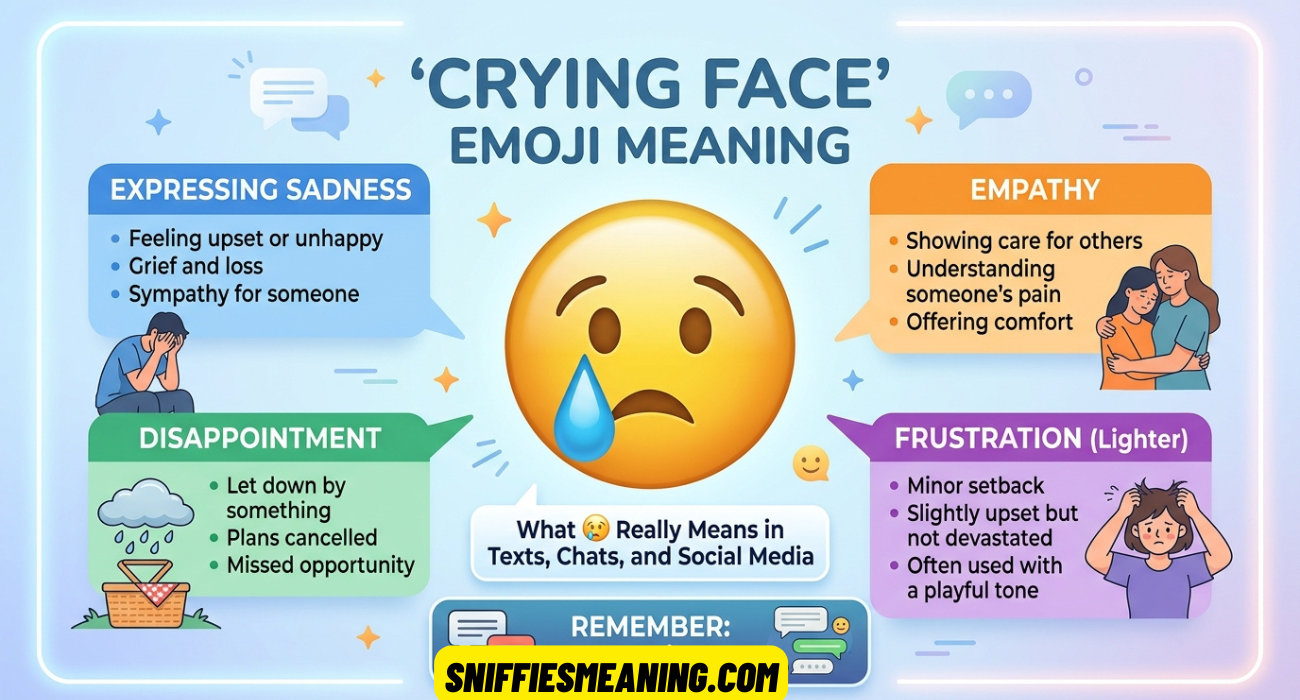
The Crying Face Emoji Meaning shows sadness, hurt, or disappointment. The 😢 emoji has one tear on its face. People use it to show quiet feelings in chats. Its meaning can change with the words and situation.
One small emoji can say a lot without many words. A single 😢 may show that someone feels hurt or down. It can also show sympathy, missing someone, or mild frustration. This makes the emoji common in daily chats.
The Crying Face Emoji Meaning can also include humor and playful feelings. People use 😢 in texts, comments, captions, and social media posts. It may show real sadness or a small unhappy moment. Context helps explain its true meaning.
What Is The Crying Face Emoji Meaning
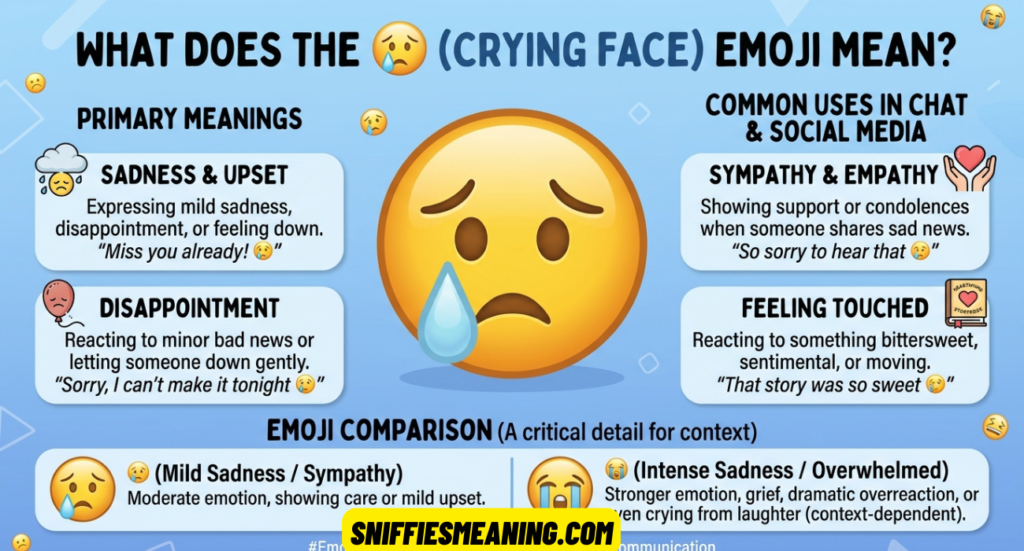
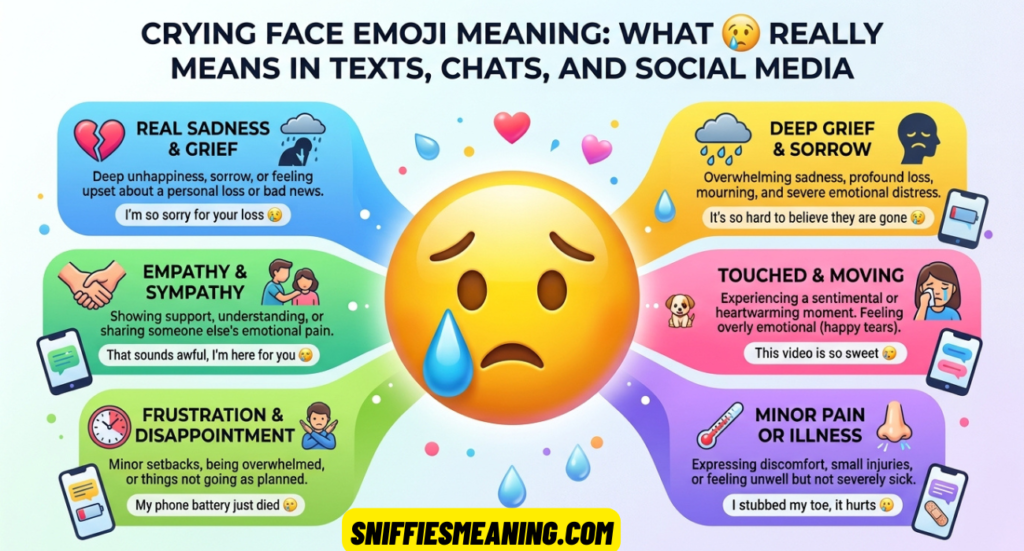
At its simplest, the 😢 emoji represents sadness, emotional pain, or hurt feelings. Its single visible tear and downturned expression create a quiet emotional signal rather than an overwhelming display of grief. Someone might send it after receiving bad news, missing a friend, losing something important, or experiencing a disappointing moment. That’s why the emoji often feels personal without becoming overly dramatic.
However, the Crying Face Emoji Meaning depends heavily on context. A message such as “I miss you 😢” usually expresses genuine emotion, while “My favorite pizza is sold out 😢” may communicate disappointment or playful frustration. In other words, the emoji can cover everything from feeling left out and feeling down to simple quiet sadness. The words around it provide the missing emotional clues.
Read Also : 60 Funny Ways to Say Hi Over Text: Fun, Cute, and Clever Greetings
What Does 😢 Mean in a Text?
In a text, 😢 commonly adds an emotional layer to a sentence. It can make a statement sound vulnerable, sympathetic, disappointed, or slightly dramatic. When someone sends only 😢, the emoji itself becomes a sign of emotion and the previous conversation becomes especially important for understanding what they mean.
Crying Face Emoji Quick Facts
The 😢 emoji is known as Crying Face. Unlike some highly dramatic crying symbols, it normally communicates a softer emotional response. Its design features a sad facial expression with a single tear, which helps distinguish it from emojis that show uncontrollable crying. These visual details make it easy to recognize even when different devices display the artwork slightly differently.
| Feature | Details |
| Emoji | 😢 |
| Common name | Crying Face |
| Core meaning | Sadness or emotional pain |
| Emotional intensity | Low to moderate |
| Common tone | Gentle, sincere, sympathetic |
| Common uses | Texting, social media, reactions |
| Can stand alone? | Yes |
| Common alternatives | 😭, 😞, 😔, 🥹 |
The emoji works particularly well for short replies because it communicates a feeling without requiring a long explanation. It’s also useful when you want to show feelings while keeping your response polite. In casual conversations, that small visual cue can help you share emotion when plain words feel too blunt.
How The Crying Face Emoji Is Different From Other Crying Emojis
Not every crying emoji carries the same emotional weight. 😢 generally represents soft emotions, while 😭, the loud crying face, often suggests much stronger distress, exaggerated emotion, or dramatic humor. 😞, the disappointed face, focuses more directly on letdown, while 😔 can suggest deep thought, sadness, or regret.
| Emoji | Common meaning | Emotional intensity | Typical use |
| 😢 | Sadness, sympathy, disappointment | Moderate | Personal messages and reactions |
| 😭 | Intense crying, emotional overload | High | Strong sadness or dramatic humor |
| 😞 | Disappointment, discouragement | Moderate | Letdowns and frustration |
| 😔 | Sad reflection, regret | Moderate | Serious or thoughtful moments |
| 🥹 | Touched, emotional, grateful | Low–moderate | Heartwarming reactions |
The biggest distinction is intensity. 😢 usually feels controlled and restrained. 😭 can signal strong pain, overwhelming emotion, or theatrical drama. Choosing the wrong one can subtly change your message. If you want to express sadness without making the situation sound enormous, 😢 often fits better.
Why People Use The Crying Face Emoji So Often
Digital conversations remove many cues that people rely on in person. You can’t hear someone’s voice or see their facial expression through ordinary text. An emoji fills part of that gap by giving the message an emotional direction. 😢 tells the reader, “This matters emotionally,” without forcing the sender to explain everything.
It also works across many everyday situations. Someone might use it after plans get canceled, when a favorite show ends, or after hearing disappointing news. Because it can represent serious emotion and lighter reactions, the emoji remains useful in normal chats. Its flexibility is one reason people continue using it instead of relying solely on words.
Crying Face Emoji Meaning In Personal Chats
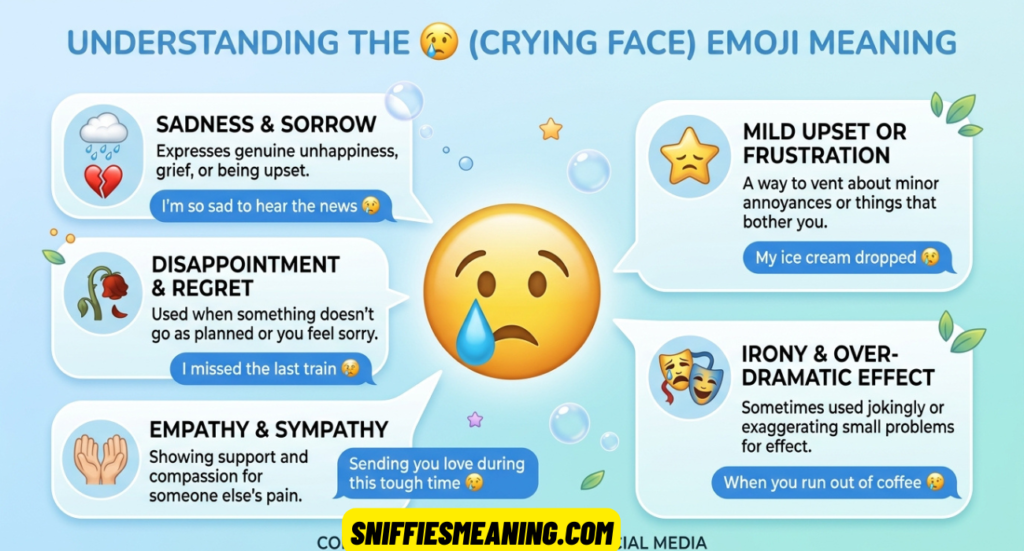
In personal chats, 😢 often carries more emotional weight because the relationship between the people matters. A friend might use it while missing someone, while a partner could send it after an emotional conversation. A family member may use it to express concern, sympathy, or affection. In these situations, the emoji can communicate care and support without adding a lengthy explanation.
It can also soften vulnerable messages. Consider “I wish you were here 😢” versus “I wish you were here.” The first version feels more emotionally exposed. Similarly, someone who says “Sorry I couldn’t make it 😢” may be saying sorry while emphasizing genuine regret. The surrounding conversation still matters, but the emoji adds warmth and emotional context.
Crying Face Emoji Meaning When Someone Sends It Alone
When someone sends 😢 without words, don’t automatically assume they’re deeply upset. It could mean personal sadness, disappointment, sympathy, or a playful reaction. Look at what happened immediately before the emoji. A serious conversation suggests genuine emotion, while a joke or minor inconvenience may point toward humor.
Crying Face Emoji Meaning On Social Media
On social media, 😢 often becomes more flexible. People use it in captions, comments, and stories to react to everything from genuine emotional moments to everyday inconveniences. A person might write “Summer is already over 😢” even though they’re obviously not experiencing profound sadness. Here, the emoji adds light sadness or humor.
Online communities also use 😢 as a reaction to relatable situations. Someone might comment 😢 under a post about a canceled concert or a favorite character leaving a TV series. In those cases, the emoji acts as a quick reaction or comment rather than a detailed emotional confession. Context determines whether the feeling is serious, exaggerated, or playful.
Meaning On Social Media Table With Examples
| Platform | Possible meaning | Example |
| Personal emotion | “I really miss you 😢” | |
| Light sadness or humor | “Vacation ended too soon 😢” | |
| TikTok | Relatable reaction | “This happens every Monday 😢” |
| Snapchat | Casual emotional response | “You left without me 😢” |
| Sympathy or sadness | “So sorry to hear that 😢” | |
| X | Reaction to a post | “That ending 😢” |
These examples show why there isn’t one fixed social-media definition. The same emoji can represent genuine sadness in one conversation and mild frustration in another. Platform culture can influence the tone, but the message, audience, and situation usually provide stronger clues than the app itself.
How People Use The Crying Face Emoji In Daily Life
Everyday communication gives 😢 plenty of room to shine. You might use it after you missed a bus, lost a game, discovered your favorite item sold out, or learned that a friend moved away. None of these situations necessarily involve major grief. Still, each one can create a small emotional reaction worth acknowledging.
This is where the emoji feels particularly relatable. Saying “I missed the last train 😢” communicates disappointment quickly. “We lost by one point 😢” adds emotional color to a sports conversation. These uses demonstrate how an emoji can capture small sad moments without turning them into a serious emotional event.
Crying Face Emoji Meaning In Work And Professional Chats
Workplace communication requires more judgment. In work chats, 😢 can fit casual conversations between colleagues who already understand each other’s communication style. Someone might write “Another 7 a.m. meeting 😢” or “The deadline moved to today 😢.” Here, the emoji communicates light stress or frustration rather than genuine distress.
The situation changes in formal emails and other official communication. An emoji may look too casual when addressing a client, manager, customer, or serious business issue. In work-related chats, informal team channels usually offer more flexibility than client-facing messages. The safest approach is to consider the relationship, company culture, and seriousness of the subject before using it.
When Is 😢 Appropriate at Work?
It can work in informal work conversations when colleagues regularly use emojis and the subject remains light. However, avoid it when discussing disciplinary matters, major failures, sensitive complaints, or other formal messages. When the subject is genuinely serious, clear words usually communicate professionalism better.
When Not To Use The Crying Face Emoji
Although 😢 has many uses, some situations call for greater care. If someone is very serious about a difficult personal event, responding with an emoji alone may seem dismissive. The same applies when someone is grieving deeply. A thoughtful written response shows that you recognize the weight of their situation.
A formal setting also changes the equation. Job applications, official business messages, serious customer complaints, and professional announcements usually benefit from direct language. The emoji isn’t inherently inappropriate, but it can weaken your message when precision and professionalism matter more than emotional decoration.
Cultural View Of The Crying Face Emoji
The basic meaning of 😢 is fairly worldwide. People in many digital communities recognize the facial expression as a signal of sadness or emotional discomfort. However, the way people use emojis can vary by age, community, language, and tone by culture. One group may use 😢 literally while another uses it to exaggerate an ordinary inconvenience.
This cultural view matters because digital language constantly evolves. Humor, memes, fandoms, and social trends can reshape familiar symbols. Even when the basic meaning remains stable, the emotional intensity can shift. That’s why reading the entire conversation is more reliable than treating an emoji as though it has one permanent definition.
Why The Crying Face Emoji Feels So Human
A single tear makes 😢 surprisingly expressive. Humans naturally read facial cues, even when those cues appear as tiny digital symbols. The downturned mouth and tear suggest vulnerability without requiring a paragraph of explanation. That visual simplicity makes the emoji feel honest, gentle, and emotionally accessible.
There’s another reason it works so well: real people don’t always express sadness dramatically. Sometimes disappointment appears as a sigh, a quiet pause, or one tear. 😢 captures that restrained reaction. Its quiet sadness feels familiar because it mirrors the way people often respond to ordinary emotional moments.
Crying Face Emoji Meaning In Online Trends
Emoji meanings don’t exist in isolation from internet culture. On modern platforms, 😢 appears in online trends, memes, reaction posts, and comments under videos. Users may attach it to jokes, exaggerated complaints, nostalgic posts, or deliberately dramatic reactions. The visual meaning stays recognizable even when the tone becomes humorous.
In these situations, 😢 often works as an emotional response or non-verbal reaction. A person doesn’t necessarily want to explain why something is funny, disappointing, or relatable. The emoji handles that emotional job in a split second. That’s part of its staying power in fast-moving online communication.
Crying Face Emoji Meaning In Text Messages
Texting gives 😢 perhaps its most natural home. People use it to communicate genuine emotion, sympathy, disappointment, and playful frustration without interrupting the flow of a conversation. “You really left without saying goodbye 😢” feels different from “You really left without saying goodbye.” The emoji changes the emotional temperature of the sentence.
Still, context remains king. If someone says “My fries fell on the floor 😢,” the emotion probably isn’t profound. If they say “Grandma passed away 😢,” the same symbol carries much greater weight. The emoji hasn’t changed. The circumstances have.
Crying Face Emoji Meaning From A Girl Or Guy
The 😢 emoji doesn’t have a separate universal meaning when a girl or guy sends it. Gender alone can’t tell you whether the person feels sad, affectionate, disappointed, or playful. Their wording, relationship with you, and the conversation immediately before the emoji provide much better clues.
For example, “I wish you could come 😢” may communicate genuine disappointment. “You’re really going to eat the last slice 😢” could be playful. Rather than searching for a hidden gender-specific meaning, pay attention to the complete message and the person’s usual communication style.
Crying Face Emoji Meaning In Different Situations
The same emoji can communicate several related emotions:
| Situation | Likely meaning |
| “I miss you 😢” | Missing someone |
| “You can’t come? 😢” | Disappointment |
| “That’s heartbreaking 😢” | Sympathy |
| “My favorite show ended 😢” | Light sadness |
| “You ate my fries 😢” | Playful frustration |
| “I’m exhausted 😢” | Feeling tired |
| “Nobody invited me 😢” | Feeling ignored or left out |
| “I’m sorry 😢” | Saying sorry with emotion |
The safest interpretation comes from combining the emoji with the actual words. A single symbol rarely tells the entire story. Think of 😢 as an emotional accent mark: useful, noticeable, and sometimes open to interpretation.
Crying Face Emoji Meaning Vs Loudly Crying Emoji
The clearest comparison is between 😢 and 😭. The Crying Face usually expresses controlled sadness or a modest emotional reaction. The loudly crying emoji typically feels much stronger and can suggest intense grief, overwhelming emotion, or exaggerated internet humor.
| Feature | 😢 Crying Face | 😭 Loudly Crying Face |
| Tears | One tear | Multiple streams of tears |
| Intensity | Moderate | High |
| Tone | Soft and restrained | Intense or dramatic |
| Common use | Sadness, sympathy, disappointment | Strong emotion, dramatic reactions |
| Humor | Sometimes | Very common online |
| Best for | Subtle emotional response | Big emotional reaction |
Neither emoji is automatically “better.” The right choice depends on the emotional volume you want. Think of 😢 as speaking softly while 😭 enters the room at full volume.
What Does 😢 Mean When Someone Sends It Alone?
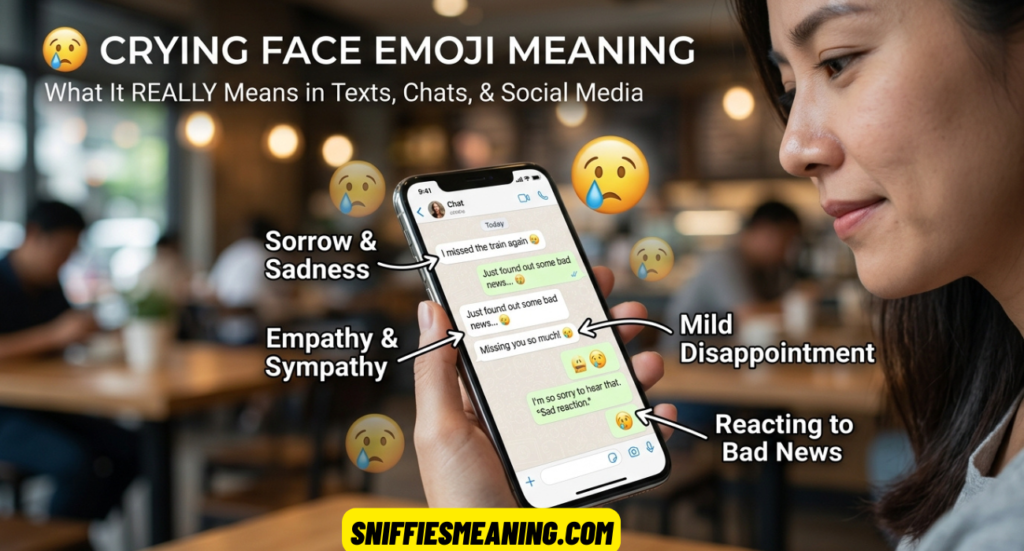
When someone sends 😢 without any words, the Crying Face Emoji Meaning usually depends on the conversation. It can express sadness, hurt feelings, disappointment, or feeling down without requiring a long explanation. The single tear creates a gentle emotional response, making the emoji useful when someone wants to show feelings without explaining everything.
However, an emoji alone can carry different meanings. It might represent quiet sadness, sympathy, missing someone, or even mild frustration about something that went wrong. Before replying, consider the previous text, the relationship between you, and the situation. A short message such as “Are you okay?” can show support, care, and concern.
Read Also : ICL Meaning: What Does ICL Mean in Texting and Social Media?
What Does 😢 Mean From a Girl?
The Crying Face Emoji Meaning from a girl can range from genuine personal sadness to a playful reaction. She might use it after receiving bad news, discussing hurt feelings, or saying she misses another person. The emoji doesn’t automatically indicate serious distress. Context, wording, and the relationship between both people matter more than the symbol alone.
In personal chats, 😢 can also soften a message about missing someone, feeling tired, or feeling ignored. It may communicate vulnerability without making the conversation overly dramatic. If she uses it after saying sorry, expressing support or acknowledging difficult feelings, the emoji often adds warmth rather than creating a completely different meaning.
What Does 😢 Mean From a Guy?
When a guy sends 😢, the Crying Face Emoji Meaning may signal disappointment, light stress, feeling down, or genuine sadness. Some people use it when they receive bad news, lose something important, or want to express sympathy. The emoji can communicate a real emotional response while keeping the message short and casual.
In normal chats, guys may also use 😢 for humor, playful complaints, or mild frustration. For example, someone might write, “My favorite team lost again 😢.” Here, the emoji doesn’t necessarily indicate deep personal sadness. Instead, it adds emotional emphasis and makes an ordinary complaint sound more relatable, expressive, or humorous.
How 😢 Changes the Tone of a Text Message
An ordinary sentence can feel completely different when you add 😢. The Crying Face Emoji Meaning often adds soft emotions, sympathy, or quiet sadness to a message. A sentence such as “I can’t come tonight” sounds neutral, while “I can’t come tonight 😢” communicates disappointment and makes the sender’s feelings easier to understand.
The emoji can also make short replies feel warmer. Instead of responding with only “Okay,” someone might write “Okay 😢,” suggesting hurt feelings, sympathy, or disappointment. Because digital communication lacks facial expressions and voice tone, emojis can act as a non-verbal reaction that helps readers understand the intended mood.
Can 😢 Mean Something Other Than Sadness?
Although sadness remains the main interpretation, 😢 doesn’t always describe serious emotional pain. People frequently use it for light sadness or humor, especially when discussing small inconveniences. Losing a favorite snack, missing an event, or watching a disappointing movie ending can inspire 😢 without indicating a genuinely painful emotional experience.
The surrounding conversation usually reveals whether the feeling is serious or playful. A message about a difficult personal situation may make 😢 feel sincere, while a joke can make it humorous. This flexibility explains why the emoji appears across social media, normal chats, comments, captions, and other forms of everyday digital communication.
Why 😢 Is Common in Casual Texting
People often choose 😢 because it communicates emotion quickly. Instead of writing several sentences about feeling down, disappointment, or hurt feelings, one emoji can provide enough emotional context. Its simple appearance makes it useful for short replies, casual reactions, and conversations where people already understand what happened.
The emoji also feels less intense than 😭. That difference makes it practical for everyday situations involving small sad moments, mild frustration, or quiet sadness. Someone can express disappointment without creating unnecessary drama. As a result, 😢 fits naturally into personal messages, friendly conversations, and quick reactions throughout daily life.
How 😢 Expresses Sympathy and Support
The Crying Face Emoji Meaning can shift from expressing your own sadness to showing support, care, and concern for another person. If a friend shares bad news, adding 😢 can acknowledge the emotional weight of their message. It can communicate, “That hurts,” even when you don’t have the perfect words.
In these situations, the emoji works best alongside sincere language. A response such as “I’m really sorry you’re dealing with this 😢” makes your emotional response clear. For deeper situations, however, words should carry the message. An emoji can support compassion, but it shouldn’t replace meaningful communication when someone is grieving deeply.
When 😢 Shows Disappointment Rather Than Sadness
Sometimes 😢 represents simple disappointment rather than deep sadness. You might use it after a concert sells out, a team loses, or your plans change unexpectedly. These situations create a small emotional reaction, but they usually don’t involve strong pain. The emoji simply shows that you aren’t thrilled with the outcome.
For example, “The tickets sold out 😢” communicates frustration and disappointment instantly. Likewise, someone who missed a bus might send 😢 to a friend without feeling genuinely upset for hours. These small sad moments are exactly where the emoji becomes useful because it gives an ordinary complaint a recognizable emotional tone.
How 😢 Is Used in Instagram Captions
On Instagram, 😢 can appear in captions, comments, and Stories when users want to emphasize an emotional moment. People may use it for goodbyes, memories, difficult announcements, or light sadness. The surrounding words usually determine whether the emoji feels serious, nostalgic, humorous, or simply expressive.
It can also appear with humor and playful content. A creator might describe a favorite product disappearing and add 😢 for exaggeration. In that situation, the Crying Face Emoji Meaning isn’t genuine distress. It becomes a visual reaction that makes the caption more relatable and gives followers an immediate emotional response.
How 😢 Works in TikTok and Video Comments
TikTok and other video platforms give 😢 another role: the quick reaction or comment. Viewers may place it beneath emotional scenes, touching stories, nostalgic clips, or unexpected endings. Instead of explaining their feelings, they can use the emoji as a compact non-verbal reaction that signals the video affected them emotionally.
The same symbol can also work ironically. A funny video about an everyday failure might receive 😢 because viewers are pretending to be devastated. This blend of humor, online trends, and genuine emotion makes emoji interpretation highly dependent on context. The caption, video, comments, and community culture all influence the final meaning.
What Does 😢 Mean in WhatsApp Conversations?
In WhatsApp, 😢 frequently appears in personal chats where people discuss everyday problems, relationships, memories, and emotional situations. Someone may use it after missing someone, feeling ignored, or receiving bad news. It can also accompany a simple apology, helping a message such as “I’m sorry 😢” sound more emotionally sincere.
The emoji doesn’t always indicate a major problem. Someone might send it after their favorite item sold out, losing a game, or hearing that a friend moved away. These everyday examples show how 😢 can express both genuine personal sadness and smaller moments of disappointment without requiring a long explanation.
How 😢 Can Show Nostalgia and Missing Someone
Nostalgia can create a softer form of sadness, and 😢 often fits that feeling naturally. Someone remembering an old trip, childhood memory, or distant friend might add the emoji to communicate quiet sadness. It suggests that the memory feels meaningful while avoiding the intensity associated with more dramatic crying emojis.
The emoji also works well when someone misses another person. A message like “Wish you were here 😢” can communicate affection, loneliness, and emotional closeness at once. In this context, the Crying Face Emoji Meaning isn’t simply “I’m crying.” It can mean, “I care about you, and I wish things were different.”
Can 😢 Make a Message Sound More Polite?
An emoji cannot automatically make every message polite, but 😢 can soften certain casual statements. For example, “You can’t come?” may sound demanding, while “You can’t come? 😢” can make the sentence feel more disappointed than confrontational. The emotional cue helps communicate the sender’s mood without adding another sentence.
This works best in friendly or informal conversations. In professional communication, the same emoji might appear too casual, particularly in formal emails or formal messages. Understanding the audience matters. The right emoji can add warmth, but the wrong one can make an otherwise clear message feel unprofessional or emotionally confusing.
How 😢 Appears in Online Memes and Trends
Modern online trends frequently turn 😢 into a humorous reaction. Memes, reaction posts, and comments under videos may use the emoji to exaggerate disappointment over something extremely minor. Someone losing the last slice of pizza, for example, might receive 😢 even though nobody actually believes the situation is tragic.
This playful use demonstrates how flexible digital symbols have become. The Crying Face Emoji Meaning can move from genuine emotion to exaggeration depending on the community and conversation. When paired with jokes, memes, or sarcastic captions, 😢 can represent humor, mock sadness, or an intentionally dramatic reaction rather than actual crying.
Why 😢 Feels More Gentle Than 😭
The visual difference between 😢 and 😭 strongly affects their emotional tone. Unicode identifies 😢 as Crying Face, while 😭 is Loudly Crying Face. The single tear on 😢 generally creates a more restrained impression, whereas 😭 communicates a much stronger outward emotional reaction.
Because of this distinction, 😢 often suits soft emotions, quiet sadness, disappointment, or sympathy. 😭 can suggest overwhelming emotion, intense reaction, or exaggerated humor. Choosing between them is similar to choosing between speaking quietly and raising your voice: both communicate emotion, but the intensity feels noticeably different.
When 😢 Should Be Replaced With Words
An emoji works well for quick reactions, but some situations need clearer communication. If someone is grieving deeply, facing very serious circumstances, or sharing painful personal information, relying only on 😢 can feel insufficient. A thoughtful sentence can communicate empathy, understanding, and genuine care much better.
The same principle applies to work-related chats and formal messages. In informal work conversations, 😢 may occasionally express light stress or a missed deadline. However, important information deserves direct wording. When the situation carries real consequences, explain what happened rather than expecting an emoji to communicate everything.
FAQs
Here are four concise, SEO-friendly FAQs for Crying Face Emoji Meaning:
What Does the Crying Face Emoji 😢 Mean?
The 😢 emoji usually expresses sadness, disappointment, hurt feelings, or quiet sadness. Its exact meaning depends on the conversation and context.
Does 😢 Always Mean Someone Is Sad?
No. People also use 😢 for humor, playful reactions, mild frustration, or small disappointing moments in everyday chats.
What Does 😢 Mean in Texting?
In texting, 😢 can show an emotional response without using many words. It may express sympathy, missing someone, feeling ignored, or disappointment.
Is the Crying Face Emoji Appropriate at Work?
It can work in informal work conversations with close teammates, but it’s usually better to avoid 😢 in formal messages and professional emails.
Conclusion
The Crying Face Emoji Meaning is simple, but it can show many feelings. It often represents sadness, disappointment, hurt feelings, or a quiet emotional moment. People also use 😢 when they miss someone, feel ignored, or receive bad news. In casual chats, it can show mild frustration or even humor. The meaning depends on the words, situation, and relationship between people.
Using 😢 can make a message feel more warm and personal. It helps people share emotion when words do not feel enough. Still, serious situations need clear and kind words, especially at work or during deep sadness. Understanding the Crying Face Emoji Meaning helps you use it in the right way. When you match the emoji with the situation, your message becomes clearer and more natural.