Skull Emoji Meaning: What 💀 Really Means in Texting and Social Media
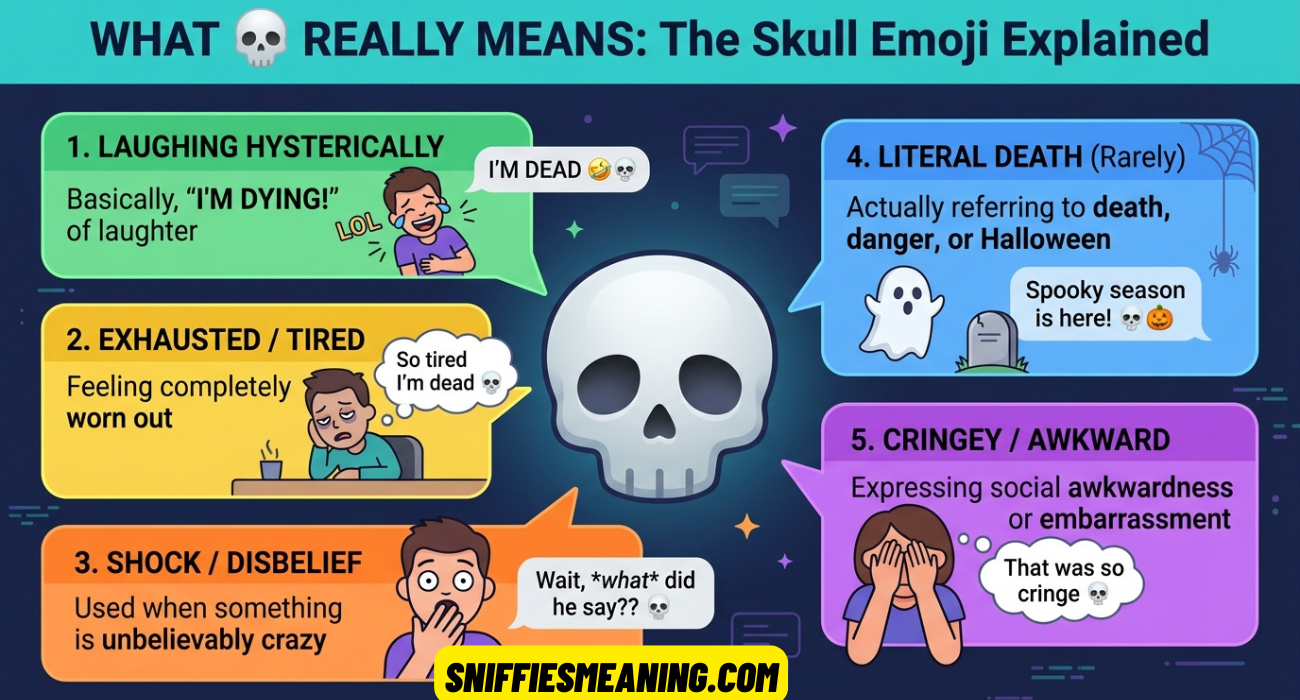
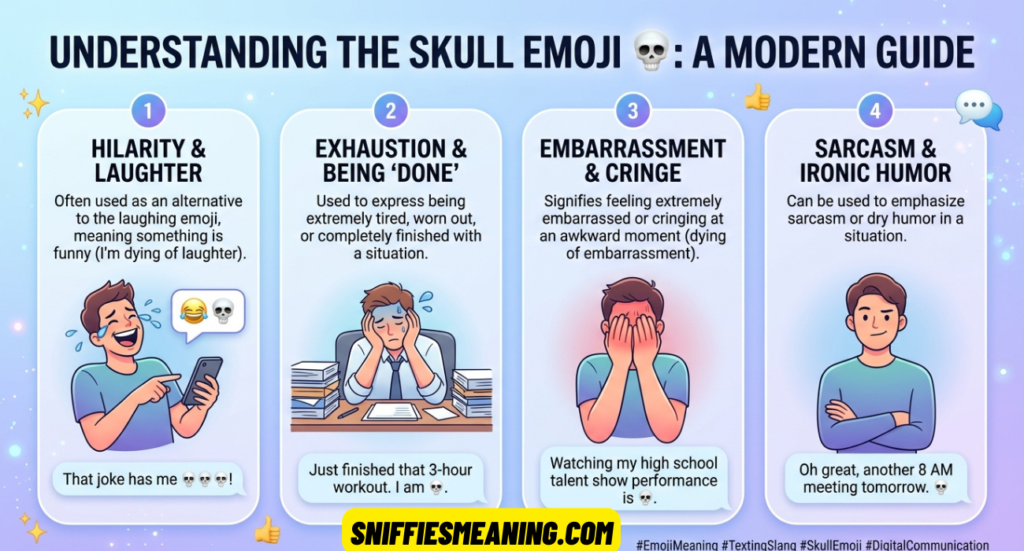
The Skull Emoji Meaning explains what the 💀 emoji means in modern communication. People often use it to show laughter, shock, or embarrassment. It can also express a very strong reaction.
A simple skull can say a lot without using many words. You may see it after a funny joke or an awkward moment. Its meaning can change quickly with the situation.
Today, people use 💀 in texting, comments, memes, and social media posts. It often means “I’m dead” from laughing. In serious situations, it can still represent death or danger.
Skull Emoji Meaning
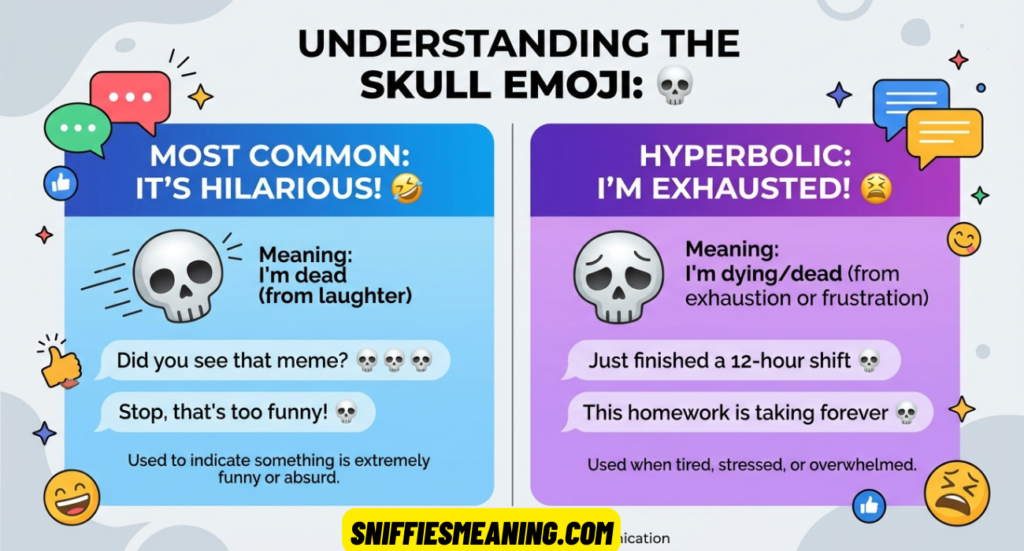
The modern skull emoji meaning is much broader than its original definition. In everyday texting and online conversations, 💀 often works as a reaction emoji. You might use it when a joke hits so hard that ordinary words don’t feel enough. In that moment, the skull means you are laughing too hard, overwhelmed, or completely unable to process what just happened.
For example, imagine your friend says, “I confidently answered a question in class, and the teacher said we weren’t discussing that chapter.” A simple “💀” can show laughter, embarrassment, and disbelief at the same time. That is the beauty of modern emoji language. One tiny image can carry several feelings.
The emoji can also show shock after unexpected news. Someone might write, “He quit his job during the meeting 💀.” Here, the skull doesn’t mean someone died. It signals surprise mixed with a strong emotional reaction.
Officially, 💀 is the Unicode character U+1F480, named “Skull.” It entered Unicode 6.0 in 2010 and later became part of Emoji 1.0. Its official identity remains connected with a human skull, while everyday use has grown to include figurative reactions such as “I’m dead from laughing.”
Read Also : IGHT Mean in Text: What This Slang Means and How to Use It
Initial Signification Of The Skull Emoji
Before internet slang gave 💀 a new personality, the skull symbol had a direct connection with death, mortality, and the fragile nature of human life. For centuries, skull imagery appeared in art, stories, pirate symbols, Halloween designs, and reminders that life does not last forever.
The symbol can also represent danger and poison. You may see skull-related imagery near hazardous substances or other warning signs. In that setting, nobody reads it as “I’m laughing.” The message is serious and clear: pay attention because something may cause harm.
The skull also appears in horror materials, spooky decorations, gothic art, and fictional stories. These uses sit between literal danger and entertainment. A Halloween poster may use a skull to create a creepy mood without suggesting a real threat.
However, meaning changes as language changes. The rise of emoji slang added a new layer to the traditional symbol. Modern users now switch between old and new meanings depending on the conversation.
That is why 💀 can feel completely different in serious discussions. A skull next to a toxic warning may refer to death, danger or poison. A skull after a ridiculous group-chat message may simply mean, “That was way too funny.”
How The Skull Emoji Meaning Changed On Social Media
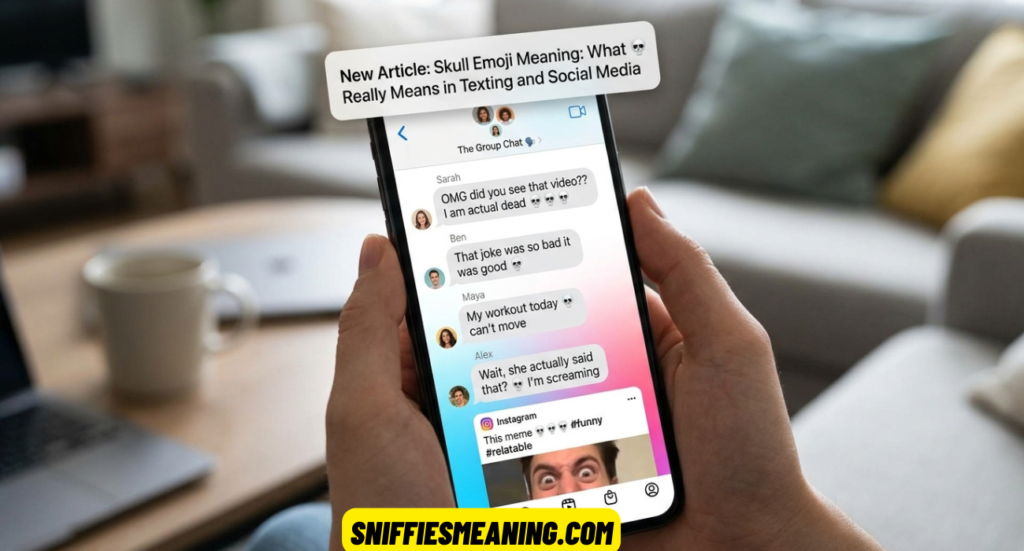
Social media changed the skull emoji meaning by turning it into a fast and highly expressive reaction. As online conversations became shorter and faster, users needed simple ways to show strong feelings. The skull became perfect for that job.
On TikTok, Twitter, Instagram, and Snapchat, people began using 💀 after funny videos, awkward comments, surprising posts, and bizarre memes. Instead of writing “I am dying of laughter,” users could drop a skull and let everyone understand the exaggerated feeling.
The shift connects strongly with modern humor and online humor. Internet jokes often use dramatic language that nobody takes literally. Saying “I’m dead” after seeing a hilarious video means the joke overwhelmed you with laughter. The skull simply gives that phrase a visual form.
This style also fits meme culture, where exaggeration makes ordinary reactions funnier. A person falling off a chair in a harmless video might receive hundreds of comments containing “💀💀💀.” The repeated emoji makes the reaction feel even stronger.
The skull became especially popular as younger users embraced it as an alternative to traditional laughing faces. Its rise reflects how digital discourse constantly changes. The meaning of a symbol can move in a completely new direction when enough people begin using it the same way. The emoji’s newer laughter-related use became especially visible in the early 2020s, when younger social media users increasingly used it to mean “I’m dead from laughing.”
Skull Emoji Meaning Facts Table
| Situation | Meaning of 💀 | Example |
| Something hilarious | Laughter | “You actually said that 💀” |
| Unexpected news | Shock | “He did WHAT? 💀” |
| Awkward mistake | Embarrassment | “I called my teacher Mom 💀” |
| Painful awkwardness | Secondhand cringe | “I watched the whole speech 💀” |
| Stressful situation | Stress joke | “Three deadlines tomorrow 💀” |
| Dark comedy | Dark humor | “My alarm betrayed me again 💀” |
| Strong surprise | Extreme reaction | “That plot twist 💀” |
| Safety warning | Literal death or danger | “Toxic substance 💀” |
The table shows why the emoji has no single universal meaning. Read the message first. Then consider the relationship, tone, and situation before deciding what the skull means.
Skull Emoji Meaning In Text Messages
In personal texting, the skull usually appears in private chats where people already understand each other’s humor. Friends may use it as a complete response because the reaction feels obvious.
Consider this example:
Friend: “I spent twenty minutes looking for my glasses. They were on my head.”
You: “💀”
The skull shows amusement without needing an explanation. It can also show mock shock, as if you are saying, “There is no way that just happened.”
The emoji works especially well after funny moments and embarrassing moments. If someone accidentally sends a message to the wrong group, their friend may answer with “💀.” That reaction communicates sympathy and laughter together.
Sometimes 💀 replaces a longer phrase. “That took me out 💀” means something was so funny or absurd that you could barely handle it. The phrase isn’t about actual harm. It is a dramatic way to describe a powerful reaction.
Still, don’t assume every skull means laughter. If the message concerns real danger, death, or safety, the meaning may return to its original form.
Skull Emoji Meaning By Context
The most important rule is simple: always read the context. The same emoji can represent humor in one message and a serious warning in another.
Words around the emoji matter. So does your relationship with the sender. A close friend may send 💀 after every ridiculous joke, while a coworker may never use it because the meaning could feel unclear.
Before interpreting the emoji, look at the topic. Then consider whether the conversation involves jokes, danger, grief, work, or something else. This small habit prevents many misunderstandings.
Casual Conversations
In casual conversations, 💀 usually represents humor, surprise, playful disbelief, or a strong emotional reaction. It often appears after silly mistakes, ridiculous stories, or unexpected comments.
For example, “I walked into the wrong apartment because both doors looked the same 💀” turns an awkward event into a funny story. The skull makes the sentence feel more playful and less serious.
Among friends, the emoji can also react to cringe events. If someone shares an old school photo with an embarrassing hairstyle, “💀” may mean, “I can’t believe this, but it is hilarious.”
Dark Humor
Dark humor uses uncomfortable or difficult ideas in a joking way. The skull naturally fits because people already associate the image with death and danger.
For example, “My final exam is tomorrow, and I haven’t opened the textbook 💀” may function as a dark joke about panic and stress. Nobody assumes the person faces literal death. The humor comes from treating an ordinary problem as if it were a disaster.
However, this style can easily miss the mark. What feels funny inside one friend group may upset someone else. Read the room before using the emoji around grief, trauma, or real misfortune.
Serious Topics
With serious topics, the traditional skull emoji meaning can return quickly. A discussion involving hazardous chemicals, actual death, toxic substances, or safety warnings needs careful interpretation.
For example, “Do not open this container. It contains poison 💀” clearly refers to danger. Likewise, skull imagery connected with actual fatalities should not automatically be treated as internet slang.
When the message involves real harm, choose caution. Don’t force a humorous meaning onto a serious situation.
Skull Emoji Meaning On Different Platforms
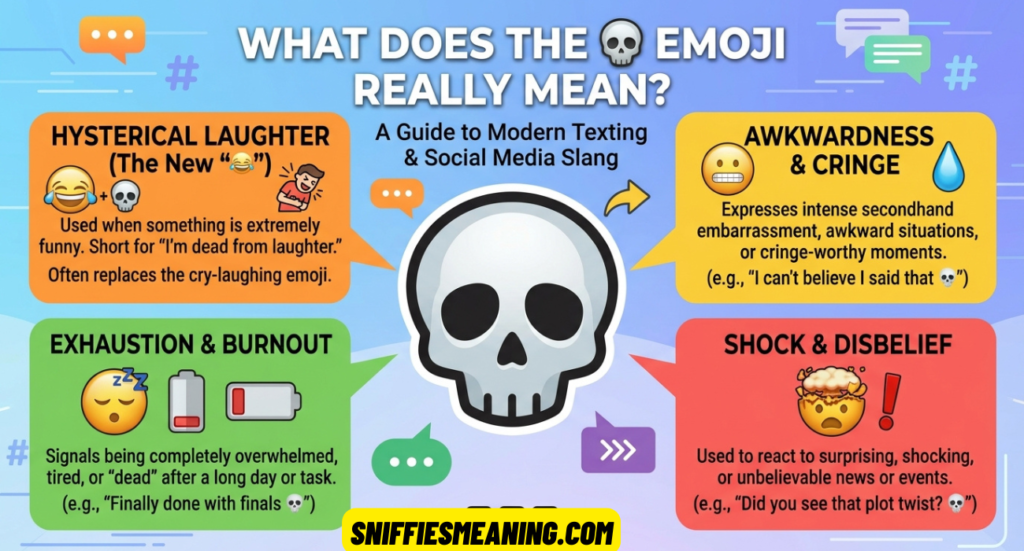
The basic meaning of 💀 stays recognizable across major apps, but each platform has its own communication habits. Short videos, public comments, captions, and disappearing messages can shape how people use the same emoji.
The skull often signals a quick reaction on every platform. However, the surrounding content gives it its final meaning. A funny video, a sarcastic post, and a private message can all produce slightly different uses.
TikTok
On TikTok, 💀 often appears under comedy videos, awkward clips, dramatic stories, and viral jokes. Users commonly drop one skull or several in a row to show that a video was unbelievably funny.
The emoji also fits secondhand cringe. If a creator shares an awkward dating story, viewers may comment “💀” because they feel embarrassed for the person while still finding the story entertaining.
On this platform, the skull usually belongs to fast-moving online humor. Short reactions matter, so one expressive emoji can work better than a long comment.
Twitter or X
On Twitter, now also known as X, 💀 often reacts to shocking opinions, funny posts, bizarre screenshots, and unexpected replies. The fast pace of public conversation makes the skull useful as a compact response.
Someone might post, “My boss scheduled a meeting for 4:59 PM on Friday.” A reply saying “💀” signals shared disbelief and frustration. It works because readers understand the unwritten joke.
The emoji can also add an ironic tone. A serious-looking statement may become playful when the skull appears at the end.
On Instagram, 💀 commonly appears in comments, captions, Stories, Reels, and direct messages. People use it after funny photos, awkward clips, jokes, and dramatic transformations.
For example, a friend posts an old childhood picture with a wild haircut. You might comment, “Why did nobody stop you? 💀” The emoji softens the teasing and shows that you are joking.
Repeated skulls can make the reaction feel stronger. “💀💀💀” usually suggests the content created even greater emotional overload than a single emoji.
Snapchat
On Snapchat, the skull often appears in casual one-to-one chats and quick reactions to Stories. Since many conversations move quickly, users may choose an emoji instead of typing a full sentence.
It works well after an awkward photo, a funny voice note, or an unbelievable update. “You actually did that? 💀” can combine surprise, laughter, and playful judgment.
Because Snapchat often involves close friends, shared emoji slang can become highly personal. Some groups may even develop meanings that make sense only within their own conversations.
Skull Emoji Meaning In Message
The meaning of 💀 becomes easier to understand when you examine the whole message. Here are common examples:
| Situation | Example Message | Likely Meaning |
| Joke | “That joke was wild 💀” | Laughter |
| Awkward mistake | “I sent the email to the wrong person 💀” | Embarrassment |
| Surprise | “He quit on the spot 💀” | Shock |
| Bad luck | “My car won’t start on Monday morning 💀” | Dramatic frustration |
| Exams | “I have four tests tomorrow 💀” | Stress joke |
| Funny video | “I watched that ten times 💀” | Laughing too hard |
| Dangerous material | “Keep away. Toxic chemical 💀” | Actual danger |
The same character changes meaning because language always depends on the situation. That’s why you should never translate 💀 word for word without considering what happened before it.
If you are unsure, look for clues. Is everyone joking? Does the sender normally use emojis playfully? Is the topic serious? These questions usually reveal the intended meaning.
Why People Use The Skull Emoji Instead Of Laughing Emojis
Many people choose 💀 instead of traditional laughing emojis because the skull feels more dramatic. 😂 simply says, “That is funny.” 💀 can suggest, “That was so funny that normal laughter doesn’t cover it.”
The skull also matches modern internet exaggeration. People enjoy reacting as if a minor event completely destroyed their ability to function. It is theatrical, playful, and often more expressive than a standard laughing face.
There is also a cultural reason. As contemporary jokes change, some older emoji choices can feel less natural in certain online groups. Users often adopt new symbols because they better match the tone of current humor.
However, traditional laughing emojis still have advantages. 😂 clearly communicates laughter to almost everyone. 💀 may confuse people who don’t know the slang. The best choice depends on your audience.
| Emoji | Main Feeling | Best Use |
| 💀 | Overwhelming, dramatic laughter or reaction | Memes and casual jokes |
| 😂 | Clear laughter | General conversations |
| 🤣 | Very strong laughter | Obvious comedy |
| 😭 | Dramatic emotion or “crying” from laughter | Emotional exaggeration |
| 😬 | Awkward discomfort | Uncomfortable moments |
When Not To Use The Skull Emoji
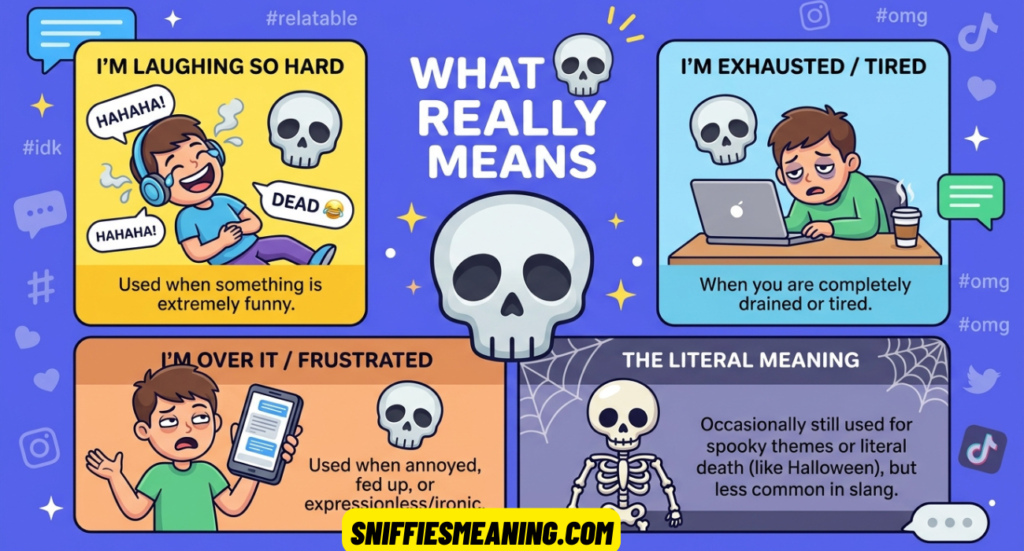
The skull emoji can be funny, but it isn’t appropriate everywhere. Avoid it when discussing someone’s real death, grief, or tragedy unless you clearly know the conversation welcomes that kind of humor.
Be careful with sensitive topics. A playful reaction may look cold or disrespectful when another person is describing a painful experience. Even if you intend humor, the other person may read the skull differently.
You should also think twice in formal settings. School emails, official announcements, and serious workplace messages usually benefit from plain language. Emojis can create confusion when tone matters.
In professional messages, clarity usually wins. Use neutral emojis when appropriate, or choose clear words instead of relying on slang. A message such as “I understand. That sounds difficult” communicates more safely than “💀” in many work situations.
The same advice applies when speaking with people from different age groups or cultures. Emoji meanings do not always travel perfectly. The skull’s laughter meaning is especially tied to modern internet habits and may feel unfamiliar outside those communities.
Read Also : Best Reply to SUP and Its Meaning: What to Say in Every Situation
Skull Emoji Meaning vs Other Emojis
The skull emoji meaning becomes clearer when you compare 💀 with similar reaction emojis. Each symbol has its own flavor.
| Emoji | Common Meaning | Main Difference |
| 💀 | Extreme laughter, shock, embarrassment | More dramatic and ironic |
| 😂 | Direct laughter | Clear and widely understood |
| 🤣 | Very strong laughter | Focuses directly on comedy |
| 😭 | Strong emotion or exaggerated laughter | Suggests crying or emotional overload |
| 😬 | Awkwardness | Best for uncomfortable situations |
| ☠️ | Serious danger or poison | More strongly linked to warnings |
The biggest difference lies between 💀 and ☠️. The skull and crossbones usually carries stronger associations with danger, toxic substances, piracy, or warnings. The standalone skull has become much more flexible in casual internet language. Emojipedia also distinguishes 💀 from ☠️ while noting that 💀 commonly expresses figurative death from extreme laughter, frustration, or affection.
That flexibility explains why the skull works so well in jokes. It can represent laughter while still borrowing dramatic imagery from its original meaning.
Why The Skull Emoji Meaning Keeps Growing
Language online never stands still. New jokes appear, old phrases gain new meanings, and emojis follow the same path. The skull emoji meaning continues to grow because it fits fast, visual communication.
One reason is efficiency. You can send one emoji instead of writing a full paragraph about how shocked or amused you feel. Another reason is flexibility. The skull works with jokes, awkward stories, memes, and exaggerated complaints.
Its success also comes from its connection with modern humor. People online often enjoy saying the opposite of what they literally mean. A skull used after a harmless joke turns an ordinary reaction into something dramatically funny.
The emoji may continue changing as new generations reshape digital discourse. That doesn’t mean its older meanings will disappear. The skull will likely keep representing both traditional ideas such as death and newer meanings such as intense laughter.
For now, the simplest rule remains the best one: read the whole conversation. If the topic is funny, 💀 probably signals an exaggerated reaction. If the topic involves real danger or death, take the symbol seriously.
How 💀 Expresses Laughter Without Saying LOL
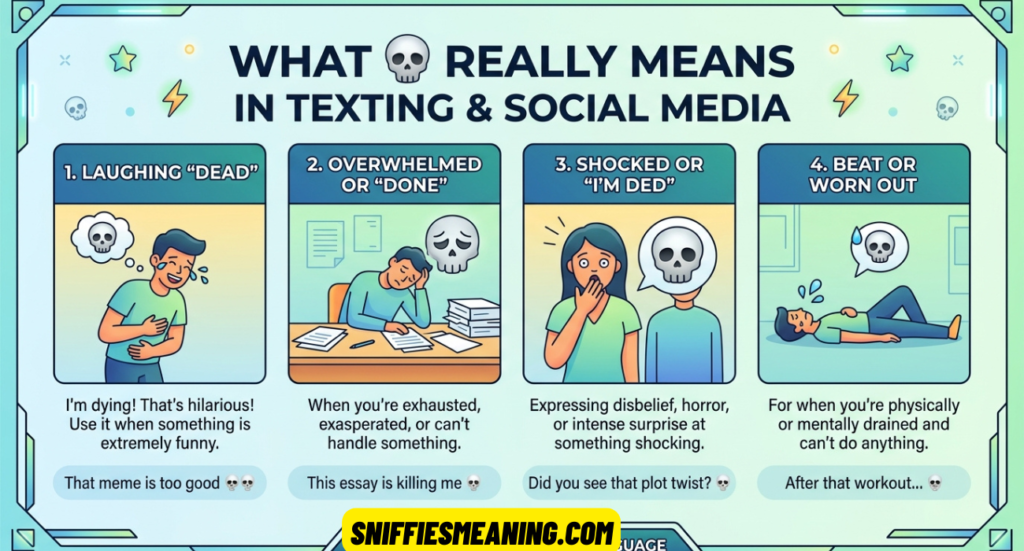
The skull emoji meaning often connects with laughing too hard. Instead of typing “LOL,” users send 💀 when something feels overwhelmingly funny. This reaction emoji adds a dramatic edge to ordinary laughter. For example, “You really wore that outfit to the party 💀” can show playful amusement without sounding harsh. The emoji keeps the message light.
Unlike traditional laughing emojis, 💀 can communicate several feelings at once. It may show amusement, shock, and emotional overload together. This makes it useful during casual conversations, especially when friends share ridiculous stories or unexpected jokes. A short skull response can sometimes feel more natural than writing a complete sentence explaining why something was funny.
What 💀 Means When Someone Says “I’m Dead”
When someone writes “I’m dead 💀,” they usually don’t describe literal death. Instead, the phrase often means that something was extremely funny, surprising, or overwhelming. This expression connects directly with modern humor and online communication. The skull gives the phrase a visual punch, making the emotional reaction easier to understand without additional explanation.
The phrase can also appear after awkward situations or cringe events. Someone might say, “I called my boss Dad today 💀.” Here, the skull represents embarrassment and secondary embarrassment rather than anything dangerous. Friends understand the exaggerated tone because the message treats an ordinary mistake as though it caused complete emotional destruction.
How Friends Use 💀 in Everyday Chats
Friends often use the skull during private chats because they already understand each other’s communication style. A single 💀 can replace a sentence such as “That is unbelievably funny.” It may also communicate mock shock when someone shares an unexpected story. Because the emoji feels informal, it fits naturally into quick conversations between people who know each other well.
The meaning can change slightly depending on the relationship. Close friends may use several skulls to intensify a reaction, while newer acquaintances might use one for mild amusement. These patterns show how emoji slang depends on shared understanding. If both people regularly use internet expressions, the skull usually feels natural rather than confusing or overly dramatic.
Why 💀 Became a Popular Reaction Emoji

The skull became popular because it offers more personality than many standard reactions. Online users often want their messages to feel dramatic, playful, and expressive without writing long explanations. 💀 achieves that instantly. It can signal amusement, disbelief, embarrassment, or surprise while keeping the message short and visually memorable.
Its popularity also reflects changing Internet culture. Younger users frequently reshape familiar symbols through memes, jokes, and social interactions. Over time, the skull became closely connected with meme culture, where exaggeration often makes ordinary situations funnier. A ridiculous video may receive dozens of skull emojis because each one reinforces the idea that viewers cannot handle what they just watched.
💀 as a Sign of Secondhand Embarrassment
One important skull emoji meaning involves secondhand embarrassment. People often use 💀 when someone else does something painfully awkward. The reaction doesn’t necessarily criticize the person. Instead, it shows that watching the situation feels almost unbearable. The emoji creates a humorous way to acknowledge an uncomfortable moment without writing a lengthy explanation.
Imagine watching a friend confidently wave at someone who wasn’t waving at them. A simple “💀” can communicate the entire reaction. This use appears frequently with embarrassing moments, awkward videos, and social mistakes. Because the skull exaggerates the emotional response, it turns discomfort into a playful comment while keeping the conversation moving naturally.
Using 💀 for Shock and Disbelief
The skull can express shock when something happens that the sender never expected. If your friend suddenly announces that they quit their job, “💀” might communicate surprise rather than humor. The emoji becomes a visual signal that the information feels difficult to process. In these situations, the intended reaction depends heavily on the surrounding message.
The same principle applies to disbelief. Someone might send “You actually did that? 💀” after hearing an outrageous story. The skull adds dramatic emphasis without necessarily showing anger. It can make a response sound playful, especially among friends. However, when the topic becomes serious, readers should look beyond the emoji and consider the complete conversation.
Why Multiple Skull Emojis Feel More Dramatic
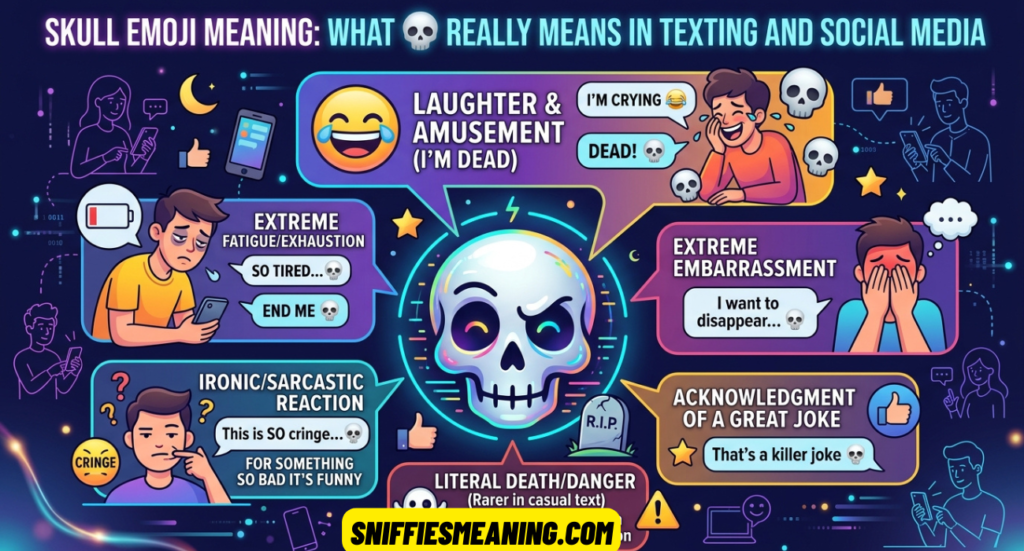
Using 💀💀💀 often creates a stronger emotional reaction than using one skull. Multiple emojis can suggest that the sender finds something exceptionally funny, shocking, or ridiculous. This repetition works much like repeated exclamation marks. It increases intensity while keeping the response short and casual.
The effect appears frequently on social media, especially underneath memes and short videos. A single skull may show amusement, while several skulls suggest complete emotional overload. Users sometimes repeat the emoji because one character doesn’t feel strong enough for the situation. The result creates a fast, visual reaction that fits modern online communication.
The Difference Between 💀 and ☠️
Although 💀 and ☠️ both feature skull imagery, their common uses differ. The standalone skull usually carries modern internet meanings such as humor, embarrassment, or dramatic reactions. Skull and crossbones, however, has stronger associations with danger, toxic substances, and warning signs. Understanding this distinction helps prevent confusion when interpreting digital symbols.
In casual conversations, 💀 commonly belongs to online humor. ☠️ tends to feel more serious because people recognize the skull-and-crossbones design from safety labels and hazardous materials. Neither meaning remains fixed in every message, though. The surrounding words still matter, especially when discussing serious topics, health risks, or real-world safety concerns.
When 💀 Communicates Dark or Ironic Humor
The skull fits dark humor because its traditional imagery already relates to death. Online users often combine that serious visual with ordinary problems to create exaggerated jokes. A person might write, “I have two exams tomorrow 💀.” The message doesn’t suggest actual danger. Instead, it humorously presents academic stress as a dramatic disaster.
This style can also feel ironic because the sender intentionally exaggerates the situation. The skull adds a darker visual element to something harmless. However, audiences differ. A joke about a difficult exam may work among classmates, while similar humor could seem inappropriate around people discussing genuine loss or trauma.
How Meme Culture Changed Skull Emoji Usage
Meme culture helped turn 💀 into a familiar symbol for exaggerated reactions. Memes often depend on fast recognition, short captions, and shared jokes. The skull works perfectly in that environment because users can understand the reaction without reading a long explanation. Its visual simplicity makes it easy to add to comments, captions, and replies.
As contemporary jokes evolve, emoji meanings evolve with them. A meme about an awkward conversation might receive 💀 because viewers experience secondhand cringe. Another meme may use the skull to show disbelief. This flexibility keeps the symbol relevant across different communities and helps explain why its modern meaning continues expanding.
Skull Emoji Meaning in Group Chats
Group chats create a unique environment for the skull emoji meaning because several people may react at once. When one person shares an absurd story, multiple members may respond with 💀. The repeated reactions create a shared sense of amusement. In this setting, the emoji can function almost like collective laughter.
Group communication also depends heavily on shared context. Members who know the background may immediately understand why someone used the skull. A newcomer might interpret it differently. This difference shows why emoji meanings aren’t purely visual. Social relationships, previous conversations, and group habits all influence how people understand the same symbol.
How 💀 Works With Text and Other Emojis

People often combine 💀 with words or other emojis to make their meaning clearer. A message such as “That was wild 💀😂” strongly signals laughter, while “Seriously? 💀” may communicate shock or disbelief. Combining symbols gives users more control over tone without requiring a long explanation.
The skull can also strengthen a sentence that already contains humor. For example, “I studied all night and forgot the test was next week 💀” turns an ordinary mistake into a funny reaction. Pairing the skull with words helps readers identify whether the sender means amusement, embarrassment, surprise, or something else.
Why Context Matters More Than the Emoji Alone
No single definition can explain every skull emoji meaning. Context remains the strongest clue because the same character can work as a joke or a serious symbol. A skull beside a funny meme usually signals humor. A skull next to a warning about toxic chemicals has an entirely different purpose.
The sender’s relationship with the reader also matters. Friends may understand playful exaggeration immediately, while strangers may interpret the emoji more literally. Differences between cultures can influence interpretation too. What feels obviously humorous within Western culture and modern online communities may not carry exactly the same meaning everywhere.
Why 💀 May Feel Different Across Generations
Different generations often develop different emoji habits. Younger internet users may recognize 💀 as an obvious reaction to funny or awkward content. Older users may still connect the image more strongly with death, danger, or horror. Neither interpretation automatically makes the other wrong. Their communication backgrounds simply differ.
This generational gap can create misunderstandings in family chats, schools, and workplaces. Someone unfamiliar with modern emoji slang may wonder why a person responded to a joke with a skull. Meanwhile, a younger reader may see the same symbol as an ordinary reaction. Clear language can help when the audience may interpret the emoji differently.
When Clear Words Work Better Than 💀
Although emojis make conversations faster, some situations require clear words. If you’re discussing grief, safety, serious news, or an important professional matter, relying on 💀 may create unnecessary confusion. A direct sentence gives the reader enough information to understand your intention without guessing.
This matters especially in professional messages and other formal settings. A neutral response such as “I understand” or “That sounds difficult” usually communicates your tone more reliably. In casual conversations, 💀 can add personality. In sensitive situations, however, simple language often provides more clarity and respect.
FAQs
What Does the Skull Emoji 💀 Mean?
The Skull Emoji Meaning usually shows extreme laughter, shock, disbelief, or embarrassment. In casual texting, it often means “I’m dead” from laughing.
Does 💀 Mean Death?
Not always. Although the skull traditionally represents death, people commonly use it online to express humor, emotional overload, or a strong reaction.
What Does 💀 Mean in Texting?
In texting, 💀 usually means something was extremely funny, awkward, or surprising. Friends often use it as a quick reaction instead of words.
Why Do People Use 💀 Instead of 😂?
People use 💀 because it feels more dramatic and ironic than a traditional laughing emoji. It can show that something was simply too funny to handle.
Conclusion
The Skull Emoji Meaning has changed with modern online communication. Today, people often use 💀 to show laughter, shock, disbelief, embarrassment, or a strong reaction. It can mean that something feels too funny or surprising to handle. Friends often use it in texting, social media comments, memes, and casual chats. The emoji can also show dark humor or a funny reaction to an awkward moment. Its meaning depends on the words and situation around it. This makes context very important when you read or send the skull emoji.
The skull also keeps its older meaning in serious situations. It can represent death, danger, poison, or a warning. For this reason, you should consider your audience before using it. Avoid the emoji in formal messages or sensitive discussions when it may cause confusion. In casual settings, however, 💀 can add humor and personality. Understanding the Skull Emoji Meaning helps you read digital messages with greater confidence and communicate your feelings more clearly.